+91-9355000192
 Login
Login
How Conversational AI for Ecommerce Drives More Conversions
- Where Shoppers Actually Drop Off
- Meet Gupshup's AI Agents for Ecommerce
- What Sets Gupshup's AI Agent Platform Apart
- Conclusion
- FAQs
See the power of intelligent conversations for your brand.

You’ve done the hard part. A shopper found your store, browsed your catalog, and added something to their cart. Then they left.
No error message. No complaint. Just silence, and an abandoned cart.
This is the quiet crisis of digital retail. Traffic isn’t the problem for most online stores anymore; conversion is. And the gap between “added to cart” and “completed purchase” is where a huge share of potential revenue disappears.
According to the Baymard Institute, the average cart abandonment rate across digital retail sits close to 70%. Other estimates place mobile abandonment even higher, driven by slower checkout flows and smaller screens. Separate research points to a similar pattern. Shoppers frequently point to unexpected costs, forced account creation, and a lack of trust signals at checkout.
The reasons are rarely about the product itself. They’re about friction: too many steps, too little reassurance, and no one available to answer a quick question. That gap shows up at the exact moment a shopper is deciding whether to buy.
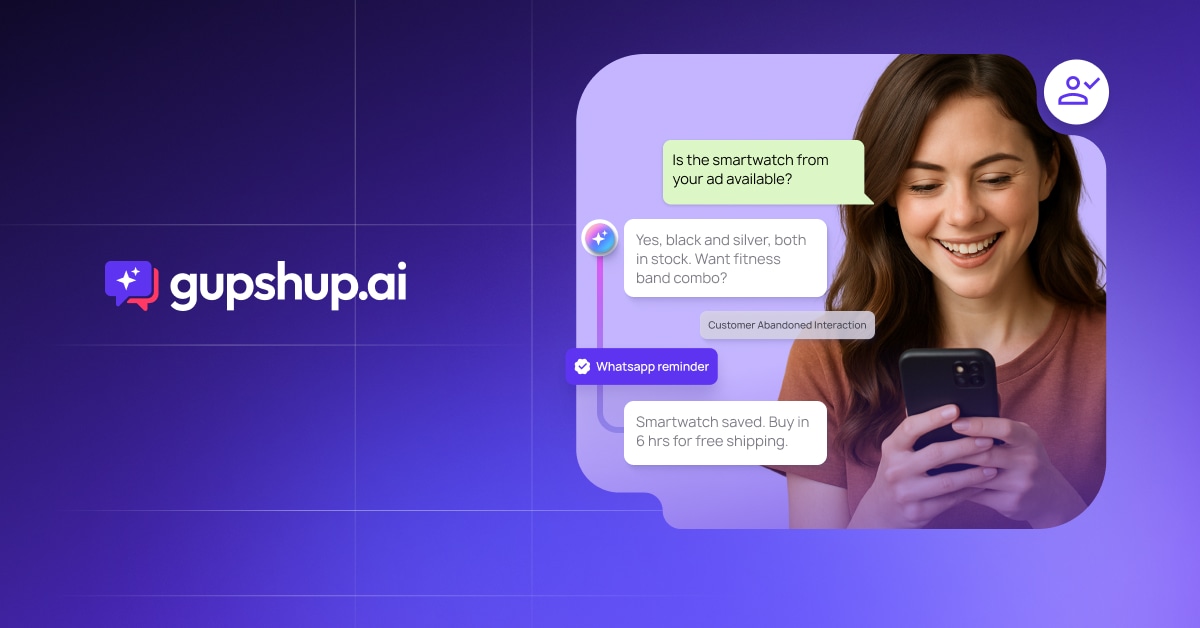
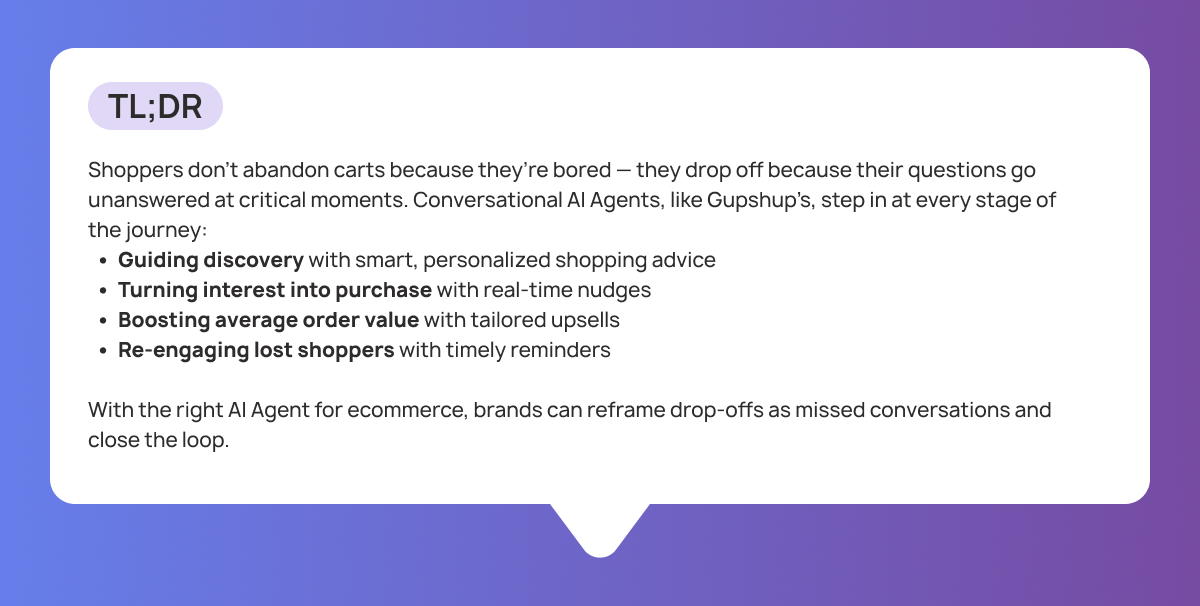
This is where Conversational AI for ecommerce changes the equation. Instead of a static checkout page, brands can offer real-time, conversational support at every stage of the journey. That reduces hesitation before it turns into abandonment.
Where Shoppers Actually Drop Off
Cart abandonment isn’t a single moment. It’s the result of friction accumulating across four distinct stages of the buying journey.
Discovery
Shoppers arrive with a need but not always the vocabulary to search for it. A generic search bar often returns irrelevant results, and shoppers give up before they find the right product.
Consideration
This is where doubt creeps in. Shoppers compare options, second-guess sizing or specifications, and look for reviews or social proof. Without quick answers, they open a new tab to check a competitor and don’t come back.
Purchase
Even a shopper who’s ready to buy can be stopped by a clunky checkout. Unexpected shipping costs, a confusing form, or uncertainty about payment security are enough to make them abandon the cart.
Post-Purchase
Abandonment doesn’t end at checkout. Shoppers who don’t get clear order updates, easy return options, or timely support after buying often don’t come back. They’re less likely to make a second purchase.
Meet Gupshup's AI Agents for Ecommerce
Gupshup’s Conversational AI for ecommerce agents are built to close these gaps, stage by stage. They work on the channels shoppers already use, like WhatsApp, web chat, and other messaging apps.
Product Finder
Conversational AI Agents for ecommerce handle use cases like product discovery. Shoppers describe what they want in plain language and get matched to the right product instantly. There’s no need to dig through filters and categories.
Lead Capture & Nurture
For shoppers who aren’t ready to buy immediately, these agents capture intent and follow up with personalized nudges. That keeps the brand top of mind without being pushy.
Order Management
Once a purchase is made, shoppers get real-time updates on order status, shipping, and delivery. These updates arrive proactively, without shoppers needing to raise a support ticket.
Warranty & Post-Sales Support
AI agents for ecommerce are trained to reduce friction even after the sale. They help shoppers register warranties, request returns, or resolve issues quickly.
What Sets Gupshup's AI Agent Platform Apart
Most chatbots are built to answer FAQs. Gupshup’s Conversational AI for ecommerce platform is built to influence outcomes at every stage of the funnel:
It connects to a brand’s existing product catalog and order systems, so responses are accurate and specific, not generic.
It works natively on WhatsApp and other messaging channels shoppers already trust. There’s no need to force them into a new app or a bot widget on a website.
It’s designed for handoff. When a shopper’s question needs a human, the conversation moves to a support agent without losing context.
Conclusion
Cart abandonment isn’t really about carts. It’s about the moments in between. That’s when a shopper has a question, a doubt, or a need, and no one is there to help. Gupshup’s Conversational AI Agents bring conversational support to e-commerce at exactly those moments. That turns hesitation into completed purchases, and one-time buyers into repeat customers.
If cart abandonment is quietly costing your store revenue, talk to our team. See how Conversational AI for ecommerce agents can fit into your existing stack. Book a free demo to see it in action.
FAQs
What is conversational AI for ecommerce?
Conversational AI for ecommerce refers to AI-powered chat agents. They guide shoppers through product discovery, purchase decisions, and post-purchase support in real time. This typically happens over channels like WhatsApp or web chat.
How does conversational AI reduce cart abandonment?
It reduces abandonment by answering shopper questions instantly, right at the point of hesitation. That could be a sizing question, a shipping concern, or uncertainty at checkout, answered before the shopper decides to leave.
Can conversational AI handle post-purchase support too?
Yes. Beyond checkout, these agents manage order updates, returns, and warranty registration. That helps retain customers for future purchases, rather than losing them after one sale.
Is conversational AI only useful for large ecommerce brands?
No. Brands of any size can use conversational AI agents to handle repetitive, high-friction moments in the shopper journey. These agents scale support without scaling headcount.

A marketer who loves turning complex tech into simple stories that customers connect with. He enjoy building go-to-market strategies, scale customer acquisition, and explore how AI can reshape marketing and customer engagement.