+91-9355000192
 Login
Login
Automated Post-Purchase Communication: Turn Updates into Conversations
- Why Post-Purchase Updates on WhatsApp Matter More Than Ever
- The Hidden Cost of One-Way Updates
- The Customer Experience Cost of Reactive Campaigns
- Introducing Gupshup Automated Campaigns: Trigger-Based, Conversational, Effortless
- Why Automated Conversational Campaigns Outperform Traditional Updates
- Real-World Examples: What You Can Automate
See the power of intelligent conversations for your brand.

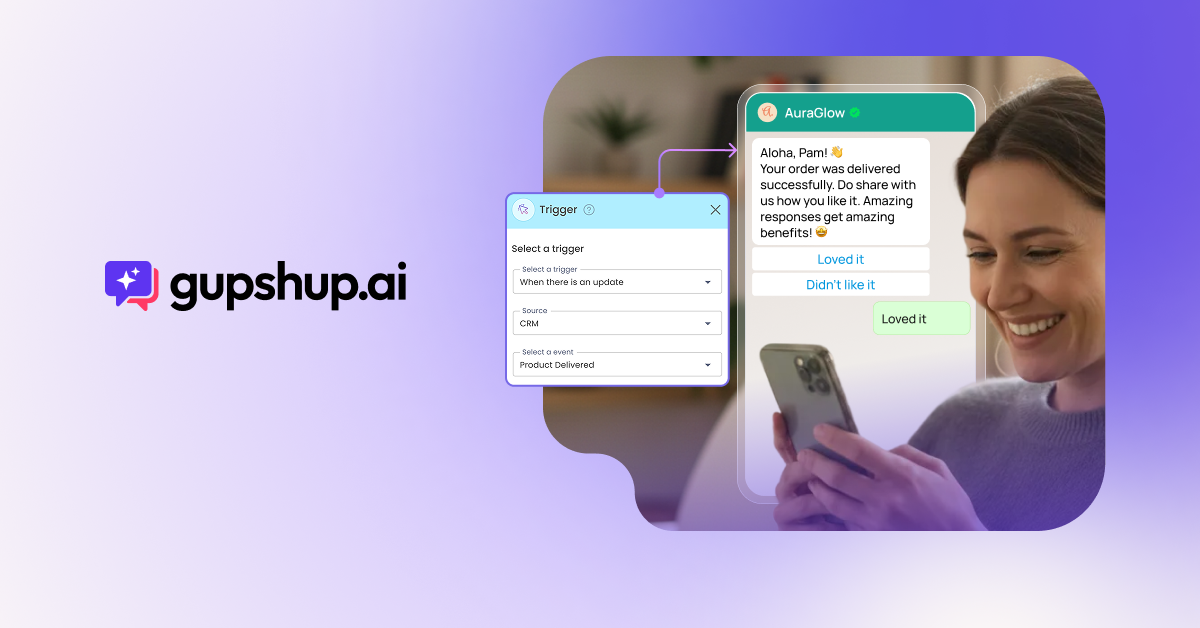
The conversation doesn’t end when a customer clicks “Place Order”—it begins there. Order confirmations, shipping updates, and delivery notifications are valuable opportunities for post purchase communication. With automation, brands can turn routine updates into conversations that build trust, boost engagement, and drive repeat purchases.
But most brands still treat these messages as one-way notifications. What if every update could answer questions, collect feedback, recommend products, or offer support? That’s where conversational automation changes the post-purchase experience.
Why Post-Purchase Updates on WhatsApp Matter More Than Ever
WhatsApp isn’t just another messaging channel—it’s where your customers already are. With over 2 billion active users and a 98% open rate, WhatsApp has become the digital equivalent of a direct conversation with your customer.
Post-purchase communication is your golden opportunity. Your customer has just completed a transaction, they’re invested in the outcome, and they’re actively waiting for information. This is when engagement rates peak, satisfaction is shaped, and loyalty is either won or lost.
Yet most brands treat this critical window as nothing more than a status update opportunity. They’re leaving massive value on the table.
The Hidden Cost of One-Way Updates
Here’s where brands are bleeding revenue: they’re sending transactional updates—order confirmations, shipping notifications, delivery alerts—and then going silent.
These one-way broadcasts serve a purpose, but they’re a missed opportunity. Every message you send on WhatsApp, that a customer replies to, opens a 24-hour customer service window. For the next 24 hours after your message, customers can respond freely, and you can engage in a two-way conversation without additional messaging costs or restrictions.
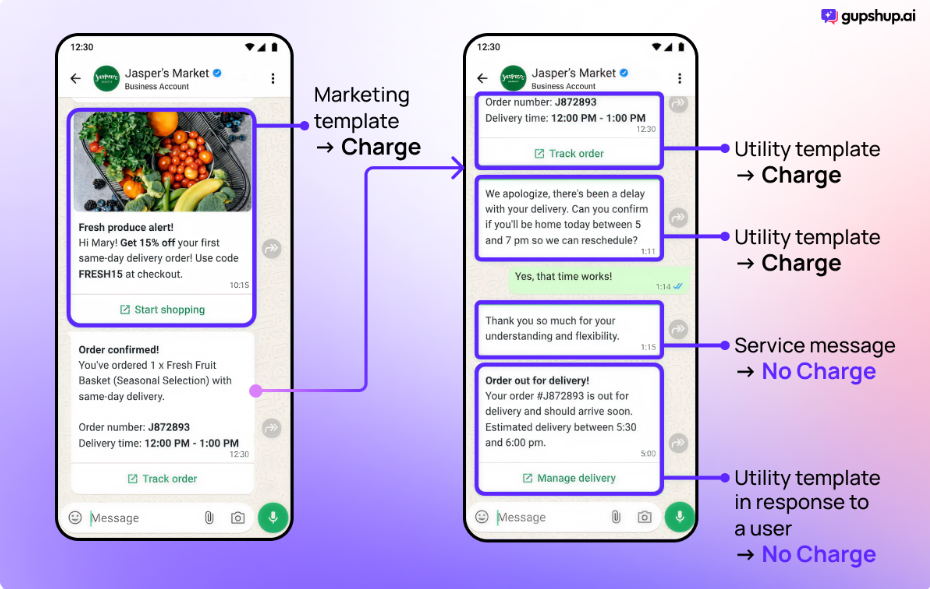
What does this mean?
When you send an order confirmation, you’re not just confirming an order—you’re opening a direct line of communication. Within that 24-hour window, you could:
- Collect feedback on the purchase experience
- Upsell or cross-sell related products
- Address concerns before they become returns
- Gather valuable customer data
- Turn a transaction into a relationship
But most brands send the update and waste the window. They’re paying for the message, earning the free conversational opening, and then doing nothing with the opportunity that follows.
The math is simple: If you’re sending 100,000 order confirmations per month and only 2% of customers engage within the 24-hour window to ask questions or provide feedback, that’s 2,000 conversations you could be having—conversations that build loyalty, prevent issues, and drive repeat purchases.
Instead, those customers are left in silence, or worse, they reach out through other channels where the context is lost and the experience is fragmented.
The Customer Experience Cost of Reactive Campaigns
Now let’s talk about what happens when campaigns aren’t trigger-based.
Imagine this: A customer’s order encounters a delivery delay on Tuesday afternoon due to weather. Your logistics team knows immediately, but your marketing team runs batch campaigns only twice a week. On Thursday morning, they send a generic “delivery update” to all customers with orders in transit.
By then, your customer has already checked tracking multiple times, called support, and started losing trust in your brand. Worse, your Thursday message doesn’t even address their specific delay—it’s just a generic “your order is on its way” that contradicts what they’re seeing in the system.
Trigger-based campaigns solve this. The moment the delay is logged, an automated message goes out: “Hey [Name], we wanted to reach out personally. Your order is experiencing a slight delay due to weather in your area. New estimated delivery: Friday. We’re really sorry about this—here’s 15% off on your next order for the inconvenience. Any questions?”
This isn’t just about speed—it’s about showing customers you’re present and attentive. You’ve acknowledged the problem before they had to hunt for answers. You’ve opened a conversation channel if they need support. That’s what drives CSAT and builds trust.
Introducing Gupshup Automated Campaigns: Trigger-Based, Conversational, Effortless
This is where Gupshup Automated Campaigns changes everything.

Gupshup Automated Campaigns is designed specifically for brands that want to move beyond static broadcasts and into intelligent, trigger-based conversational marketing. It’s designed to help you be proactive, not reactive.
Here’s how it works:
You define the trigger—any customer action or inaction—and Gupshup automatically launches the campaign when that trigger occurs. These triggers can come from anywhere:
- Your website: Cart abandonment, product views, form submissions
- Your app: Account creation, feature usage, in-app purchases
- Your WhatsApp Business Account: User messages, bot interactions, opt-ins
- Your CRM or database: Customer lifecycle events, renewal dates, support tickets
For ecommerce brands, a WhatsApp Shopify integration can connect customer and order data with automated campaigns, making it easier to deliver timely post-purchase updates and start relevant conversations.
The beauty of this system is its flexibility. You’re not constrained by technical limitations or developer bandwidth. The DIY interface makes it simple to set up complex, behavior-driven campaigns without writing a single line of code.
But the real magic happens when you combine Gupshup Automated Campaigns with Gupshup Conversation Builder.
Why Automated Conversational Campaigns Outperform Traditional Updates
When you leverage Automated Campaigns with Gupshup Conversation Builder, you’re not just sending messages—you’re creating intelligent, two-way conversations that maximize the 24-hour engagement window.
Instead of sending an order confirmation and hoping the customer reads it, you send a conversational campaign that:
- Confirms the order
- Asks if they have questions about delivery
- Invites them to share feedback on the purchase journey
- Recommends complementary products based on their order
- Offers immediate support if anything is unclear
All of this happens automatically, within the flow of a single conversation, during the 24-hour window opened by your initial message.
Real-World Examples: What You Can Automate
Let’s look at specific campaigns that drive results:
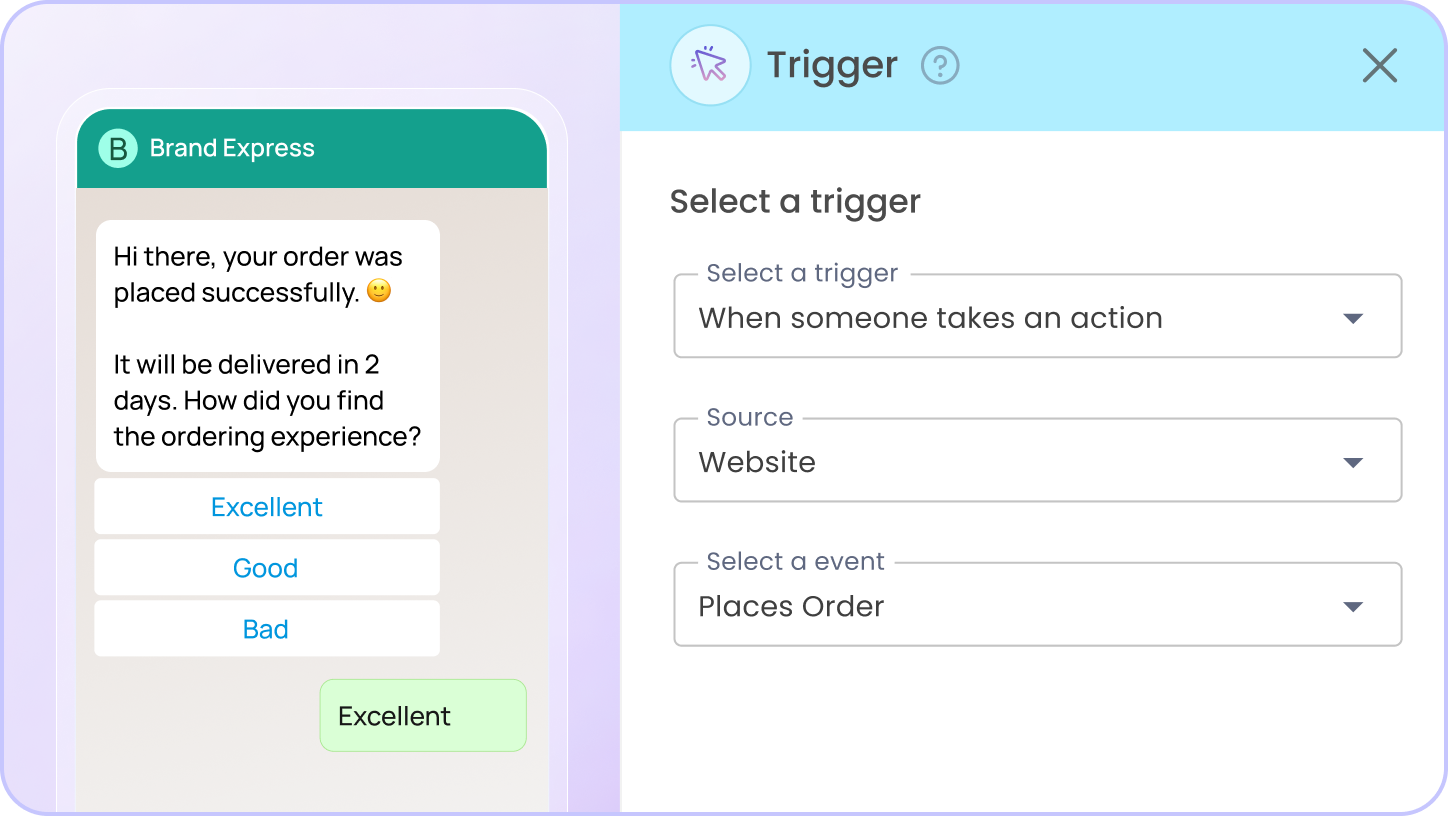
1. Send order confirmation that collects customer feedback while it’s fresh
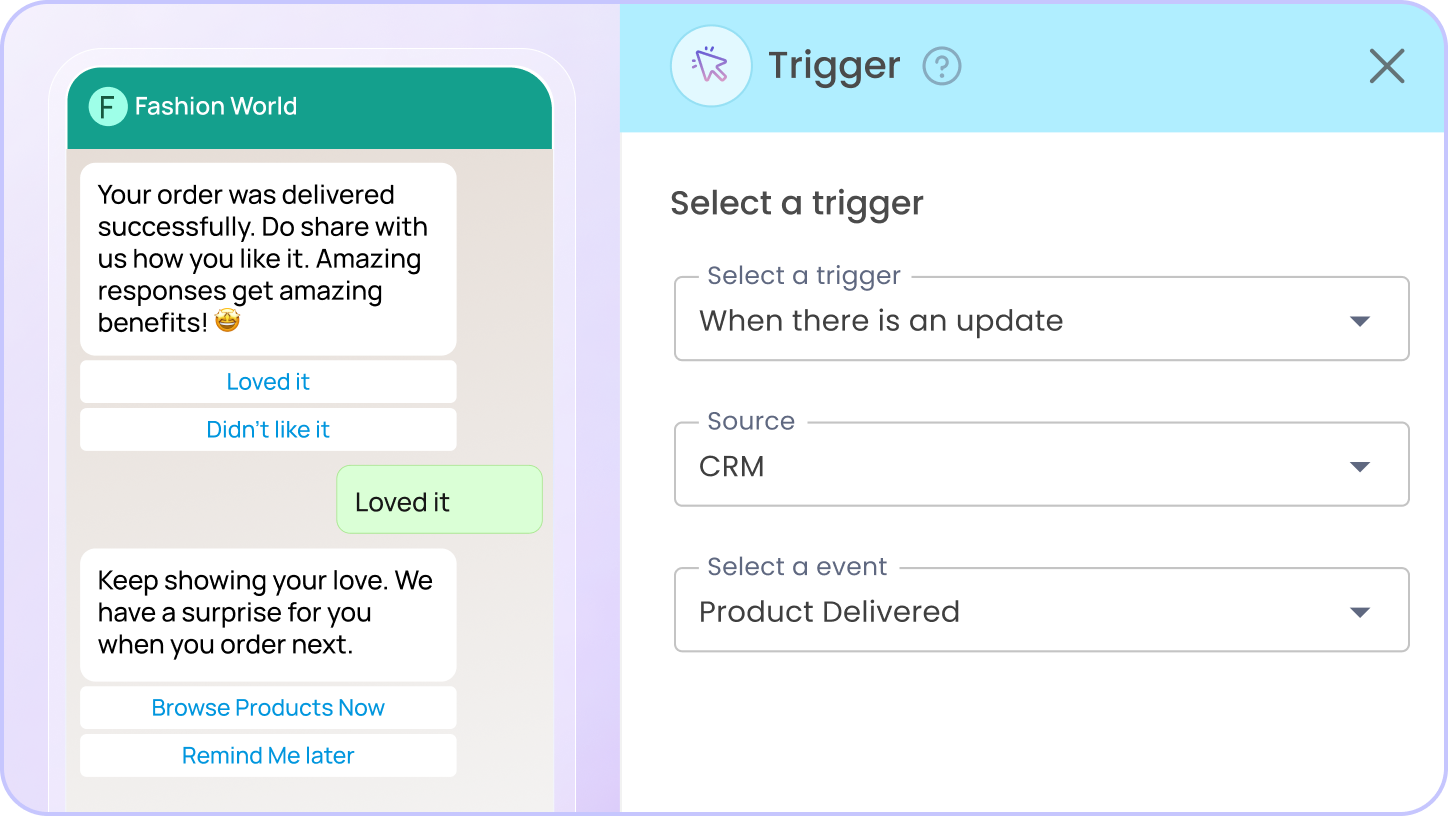
2. Trigger delivery updates that get customers excited for the next deal
3. Deliver messages that enquire reasons for returns and minimizes RTOs
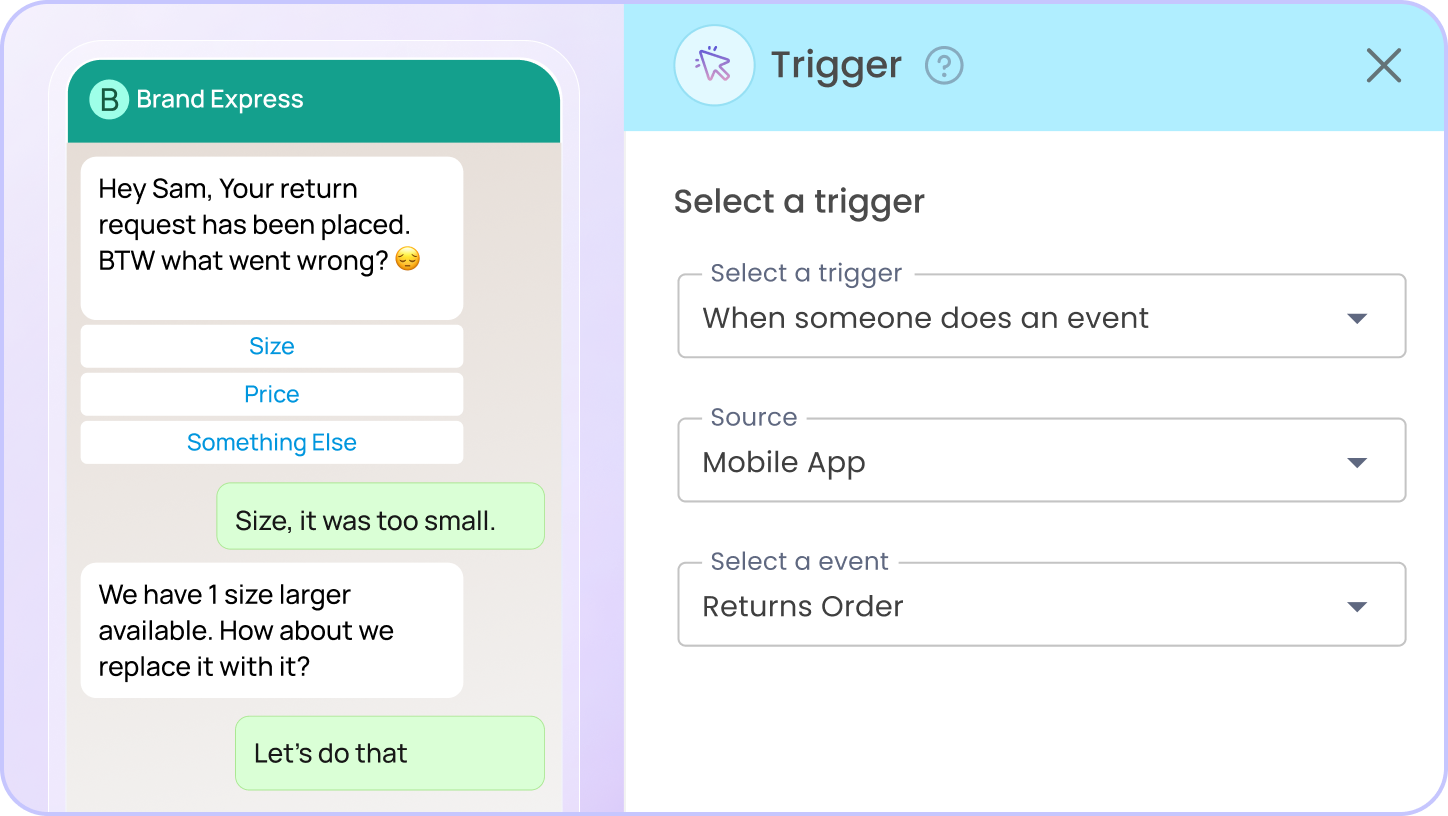
4. Shoot delivery updates that reduce delivery failures
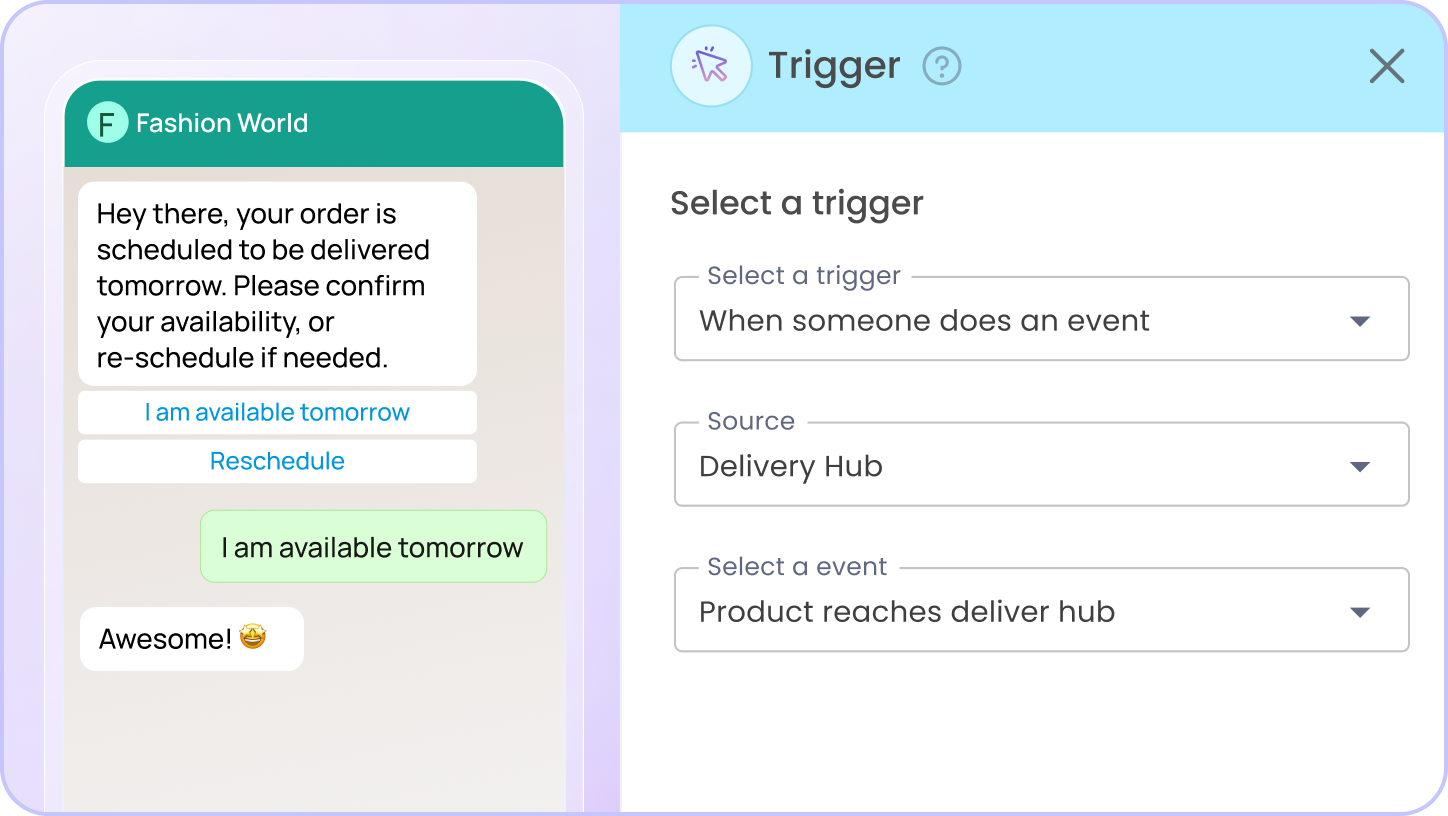
The common thread across all these examples? Proactivity.
With Gupshup Automated Campaigns, you’re not waiting for customers to reach out with problems—you’re anticipating their needs and addressing them before they become friction points. You confirm delivery windows before failed attempts. You understand return reasons before processing them. You invite feedback while experiences are fresh.
This proactive approach transforms customer experience. It reduces anxiety, prevents problems before they escalate, and builds the kind of trust that turns one-time buyers into lifelong customers.
After all, great WhatsApp marketing isn’t about broadcasting messages—it’s about building conversations.
Start automating your post-purchase conversational campaigns today.

Product marketer who is helping brands not just connect with their customers but converse with them - to build a long, meaningful relationship that converts into lasting business impact.
Read: Gupshup Named Established Leader in Juniper Research’s RCS for Business Vendors 2026 Competitor Leaderboard