+91-9355000192
 Login
Login

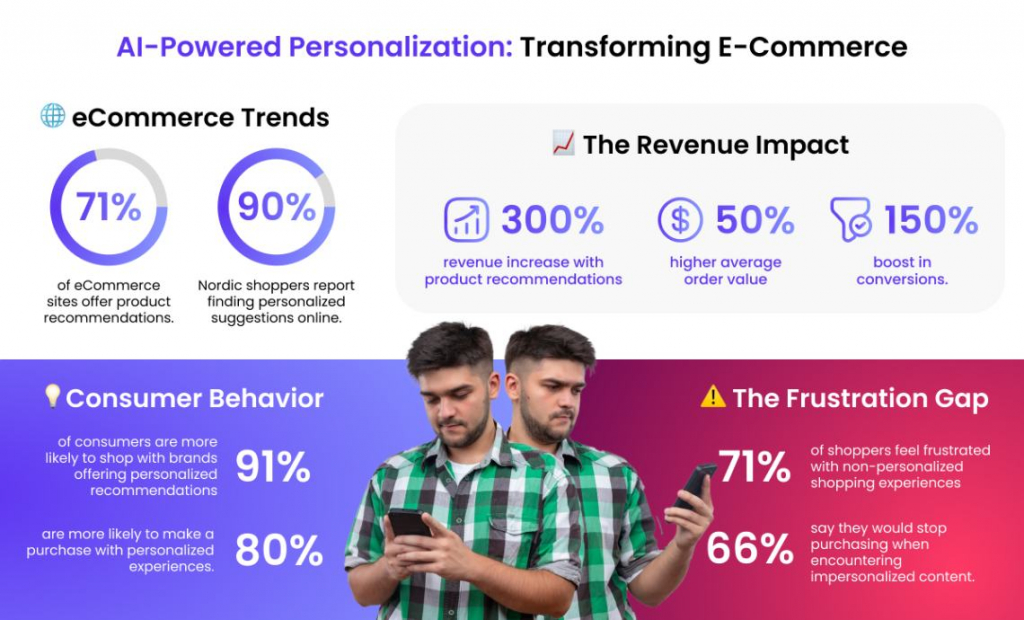
Personalization isn’t a one-off tactic bolted onto a chatbot. It’s a mindset that shapes every message a customer receives, from the first product recommendation to the final purchase reminder. Here are ten ways an AI shopping assistant turns that mindset into measurable results.
1. Hyper-Personalized Recommendations
AI agents analyze customer behavior to deliver individual product suggestions, whether that’s a skincare pick or an offer for a loyal shopper.
Example: A customer adds a winter coat to their cart on a Shopify store but doesn’t check out. A WhatsApp message follows: “Hi [Customer’s Name]! We noticed you loved our winter coat collection. Here’s 10% off to complete your purchase.”
2. Enhanced Customer Engagement
Personalized conversations land better because they’re relevant and timely. Gupshup’s integration with e-commerce platforms lets businesses pull transactional data for real-time responses.
Example: “Happy Birthday, [Customer’s Name]! Celebrate with 20% off your favorite products. Click here to shop now.”
3. Driving Business Outcomes
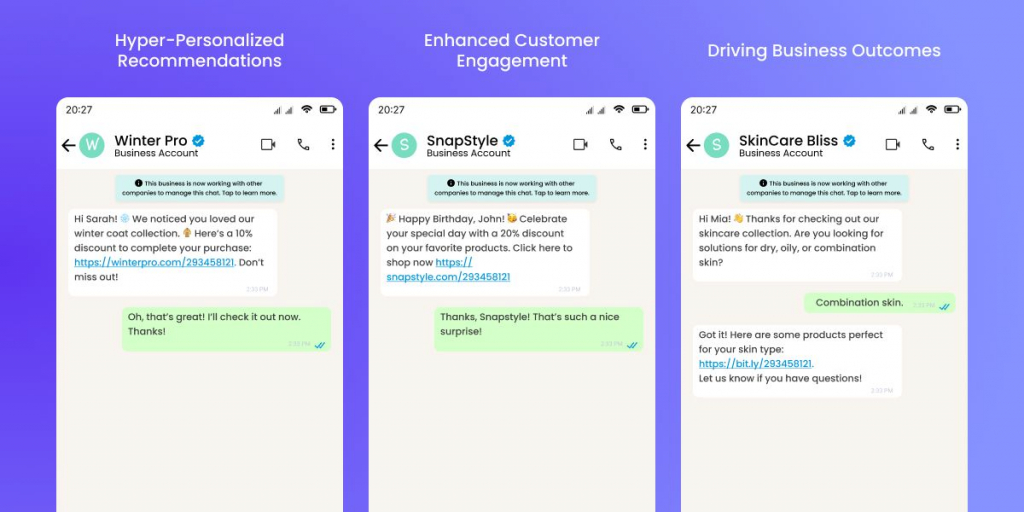
From nurturing new prospects to re-engaging inactive customers, AI shopping agents run data-driven conversations that lead to real results.
Example: a user clicks an Instagram skincare ad and starts a WhatsApp chat. The bot asks whether they have dry, oily, or combination skin, then recommends products based on the answer.
4. Building Long-Term Customer Relationships
Personalized conversations build trust by showing customers their preferences are understood, turning one-time buyers into repeat ones.
Example: “Hi [Customer’s Name], your favorite vegan snacks are back in stock! Order now before they run out.”
5. Data-Driven Decision Making
Every personalized conversation generates insight businesses can use to refine strategy and improve their offerings.
Example: “Hi [Customer’s Name], we’d love your feedback on our new product range. What do you think of the latest features?” Responses get logged and analyzed for future improvements.
6. Optimized Campaigns with Granular Segmentation
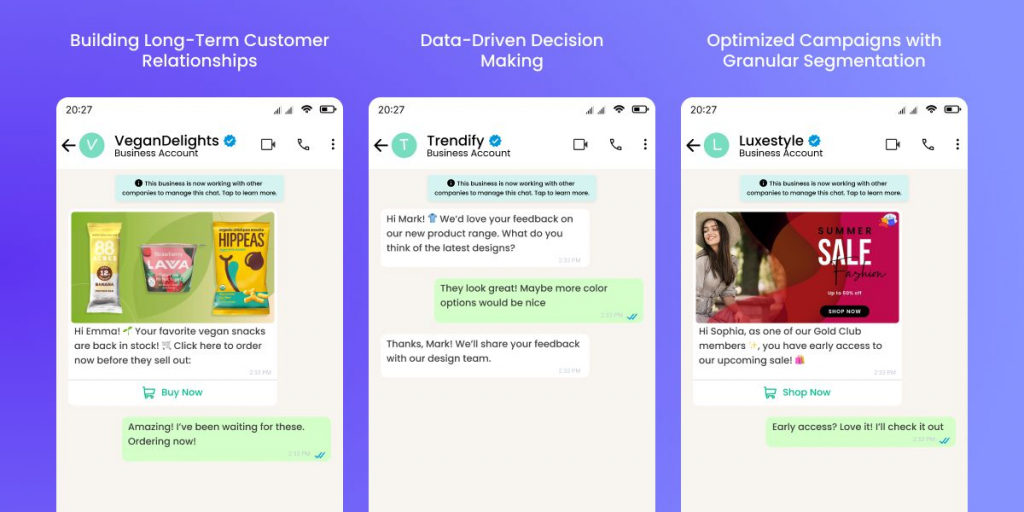
AI agents automatically sort customers into segments like hot leads, new buyers, or premium members, so campaigns target precisely.
Example: “Hi [Customer’s Name], as a Gold Club member, you have early access to our upcoming sale. Start shopping before anyone else!”
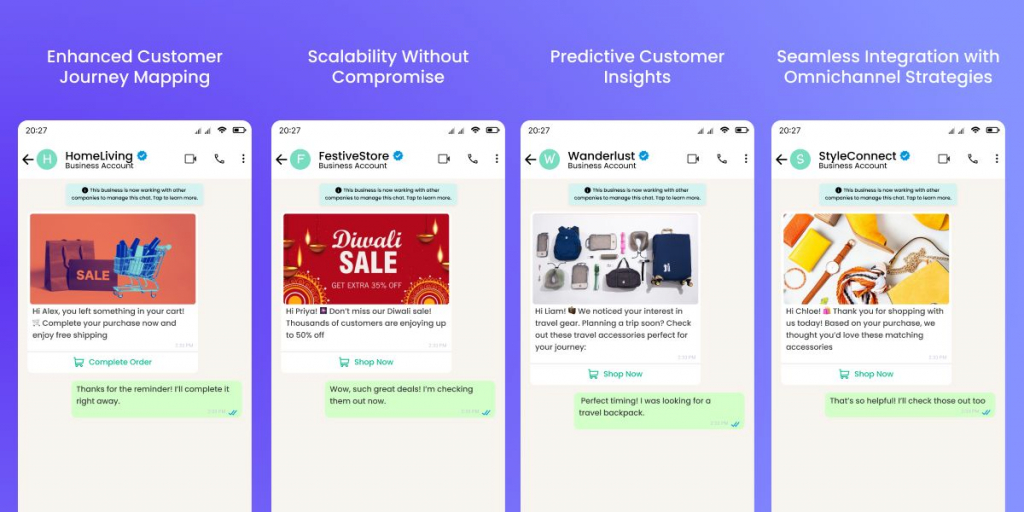
7. Enhanced Customer Journey Mapping
Tracking behavior from browsing to purchase helps businesses spot and remove friction points across the journey.
Example: “Hi [Customer’s Name], you left something behind! Complete your purchase now and enjoy free shipping.”
8. Scalability Without Compromise
AI-powered personalization scales without losing consistency, which matters most for fast-growing brands.
Example: “Hi [Customer’s Name], don’t miss our Diwali sale! Thousands are already enjoying up to 50% off. Shop now before the deals end.”
9. Predictive Customer Insights
Predictive analytics let AI shopping agents anticipate needs before a customer expresses them, enabling proactive, well-timed suggestions.
Example: “Hi [Customer’s Name], we noticed your interest in travel gear. Planning a trip? Check out these accessories for your next adventure!”
10. Seamless Integration with Omnichannel Strategies
AI agents bridge online and offline channels so customers get a consistent experience across every touchpoint.
Example: After an in-store purchase, the customer gets a WhatsApp message: “Thank you for visiting! Based on your purchase, we thought you’d love these matching items.”