+91-9355000192
 Login
Login
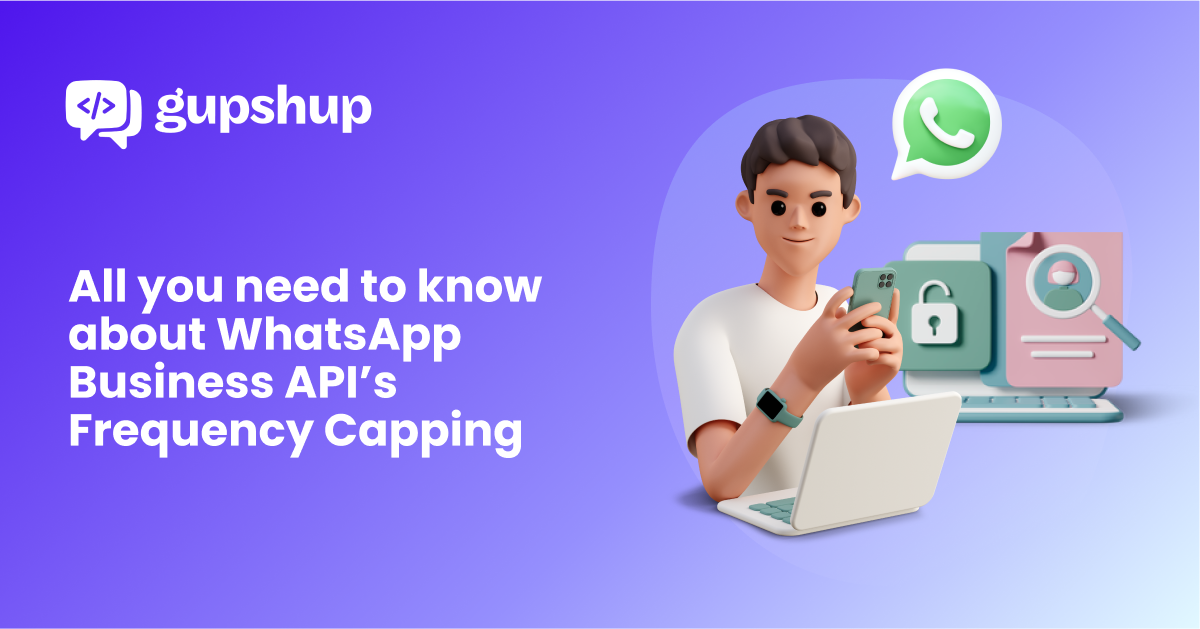
All you need to know about Meta’s Frequency Capping on Marketing Messages
- What Is Meta Frequency Capping?
- Why Meta Introduced Frequency Capping
- How to Rethink Your WhatsApp Strategy Under Frequency Capping
- FAQs
See the power of intelligent conversations for your brand.

If you run marketing campaigns on WhatsApp Business API, this update affects you directly.
Meta, the company behind WhatsApp Business APIs, has rolled out Meta Frequency Capping, a feature that limits how many marketing messages a single user can receive across all the brands messaging them. It’s a shift that calls for a fresh look at how you plan your outreach.
What Is Meta Frequency Capping?
Meta Frequency Capping limits how many marketing messages a WhatsApp user can receive from all brands combined within a set time window.
For example, once frequency capping is active, a user might get messages from no more than 15 brands in a rolling 7-day window. Meta decides this window dynamically and doesn’t share the exact number with businesses, in order to protect the user experience on the channel.
These limits aren’t fixed either. Meta adjusts them over time, which means businesses need to plan outreach thoughtfully rather than relying on a set quota.
Why Meta Introduced Frequency Capping
The goal behind Meta Frequency Capping is simple: protect users from a flood of marketing messages from too many brands at once. Businesses benefit too. A cleaner, less cluttered inbox means the messages that do land are more likely to get read instead of lost in the noise.
Which Messages Does Frequency Capping Affect?
Frequency capping mainly applies to promotional messages sent through WhatsApp marketing templates.
A couple of message types aren’t affected:
- Everyday customer conversations inside the 24-hour service window
- Messages tied to your Click-to-WhatsApp ads
How to Rethink Your WhatsApp Strategy Under Frequency Capping
With Meta Frequency Capping in place, it’s worth revisiting how you use WhatsApp for marketing:
- Send fewer messages, but make each one worth reading
- Build real two-way conversations instead of one-way blasts
- Track performance and adjust your sending frequency based on what’s actually working
There’s still a lot Meta hasn’t disclosed about how the capping algorithm works. But frequency capping also pushes businesses to get more creative, using WhatsApp chatbots to build stronger two-way relationships and leaning into user-initiated messaging instead of relying only on outbound campaigns. Gupshup’s Campaign Manager helps you track delivery and adjust your sending strategy as Meta’s limits evolve.
Meta Frequency Capping isn’t about limiting your reach for its own sake. It’s about protecting the channel every business on WhatsApp depends on. The brands that adapt now, by sending fewer, more relevant messages, are the ones frequency capping will barely touch.
FAQs
What is Meta Frequency Capping?
Meta Frequency Capping is a feature that limits how many marketing messages a WhatsApp user in India can receive within one week.
Why did Meta introduce Frequency Capping?
Meta introduced it to reduce message overload for users, which was lowering the ROI businesses got from their marketing messages.
When do the per-user marketing template limits take effect?
Starting February 6, 2024, Meta Frequency Capping applied to template messages sent to a limited group of WhatsApp users in India. By February 13, 2024, it extended to all WhatsApp users with an Indian phone number.
Does Frequency Capping affect all users?
No. It only applies to marketing messages sent to users with an Indian (+91) phone number.
Will session messages and CTWA retargeting campaigns be affected?
No. Session messages and CTWA retargeting campaigns are not affected by frequency capping.
What messages does the limit apply to?
The limit applies only to marketing template messages that open a new marketing conversation. If a marketing conversation is already open between a business and a user, template messages sent within it aren’t affected.
Does the limit apply to messages that mix utility and marketing content?
Yes. A message that blends utility and marketing content is treated as a marketing message, so it falls under frequency capping and may not get delivered.
What research has Meta done on Frequency Capping?
Meta’s own data suggests the number of messages actually capped will be small, meaning very few messages should fail to deliver because of it.

Vartika leads marketing at Gupshup and has ~16 years of experience in marketing across early-stage startups and large enterprises. A Marketing specialist by profession, a wanderer at heart, an enthusiastic cook, and a painter for the soul.
×
Read: It’s Holi: WhatsApp Marketing Strategies to Increase Conversions During the Festival of Colors