+91-9355000192
 Login

AI Agent for Restaurants: How It Improves Ordering, Bookings, and Guest Service
- What Is an AI Agent for Restaurants?
- Why Restaurants Need an AI Agent
- 9 Ways an AI Agent Improves the Restaurant Guest Journey
- Benefits of an AI Agent for Restaurants
- Conclusion
See the power of intelligent conversations for your brand.

During a dinner rush, phones keep ringing, guests wait for tables, and delivery customers keep asking, “Where’s my food?” Staff can’t answer everyone at once, so orders get missed and guests leave unhappy. An AI agent for restaurants solves this. It’s an AI assistant that chats with guests on WhatsApp, web, and other messaging apps to take orders, book tables, share menus, collect payments, and send delivery updates 24/7, while your team focuses on food and service.
Restaurants are already moving in this direction. According to the National Restaurant Association’s State of the Restaurant Industry 2026 report, 26% of operators already use AI-related tools, and 60% plan to invest more in technology to improve the customer experience. In this blog, you’ll learn what an AI agent for restaurants is, why restaurants need one, and nine ways it improves the guest journey from order to feedback.
What Is an AI Agent for Restaurants?
An AI agent for restaurants is an AI-powered assistant that talks with guests in natural language on messaging apps like WhatsApp, Instagram, and a restaurant’s website. Unlike basic chatbots, it understands intent and context, so it can take orders, recommend dishes, book tables, process payments, resolve complaints, and hand complex issues to staff.
AI Agent vs Traditional Restaurant Chatbot
| Feature | Traditional chatbot | AI agent for restaurants |
|---|---|---|
| Conversations | Fixed menus and buttons | Natural, free-text conversations |
| Ordering | Simple, step-by-step forms | Understands requests like “two veg pizzas, no onions” |
| Recommendations | Same suggestions for everyone | Personal picks based on order history |
| Support | Answers basic FAQs | Resolves delivery, billing, and quality issues |
| Handover | Basic or none | Passes the chat to staff with full context |
Why Restaurants Need an AI Agent
Guest loyalty is everything in the food and beverage industry, and competition keeps growing. However, restaurant teams can’t always keep up with every request, whether it’s a food order, a table booking, or a complaint. As a result, slow replies hurt the guest experience and the brand.
Meanwhile, guests increasingly prefer to message businesses rather than call. According to Meta’s State of Business Messaging report, based on a 2025 Kantar survey across 22 markets, 73.3% of consumers prefer to contact businesses through messaging, and 72.4% are more likely to buy from brands that offer it.
With an AI agent, guests no longer have to call to reserve a table or wait in line to order. Instead, the agent answers FAQs, takes bookings, processes orders, and collects payments around the clock, just like a support representative. Therefore, your staff can spend more time on the guests in front of them.
9 Ways an AI Agent Improves the Restaurant Guest Journey
Point-of-sale (POS) journeys are changing fast, and conversational AI now makes ordering and service quicker and more convenient. Here’s how Gupshup’s AI agents help restaurants at every step.
1. Easy Ordering on WhatsApp and Other Apps
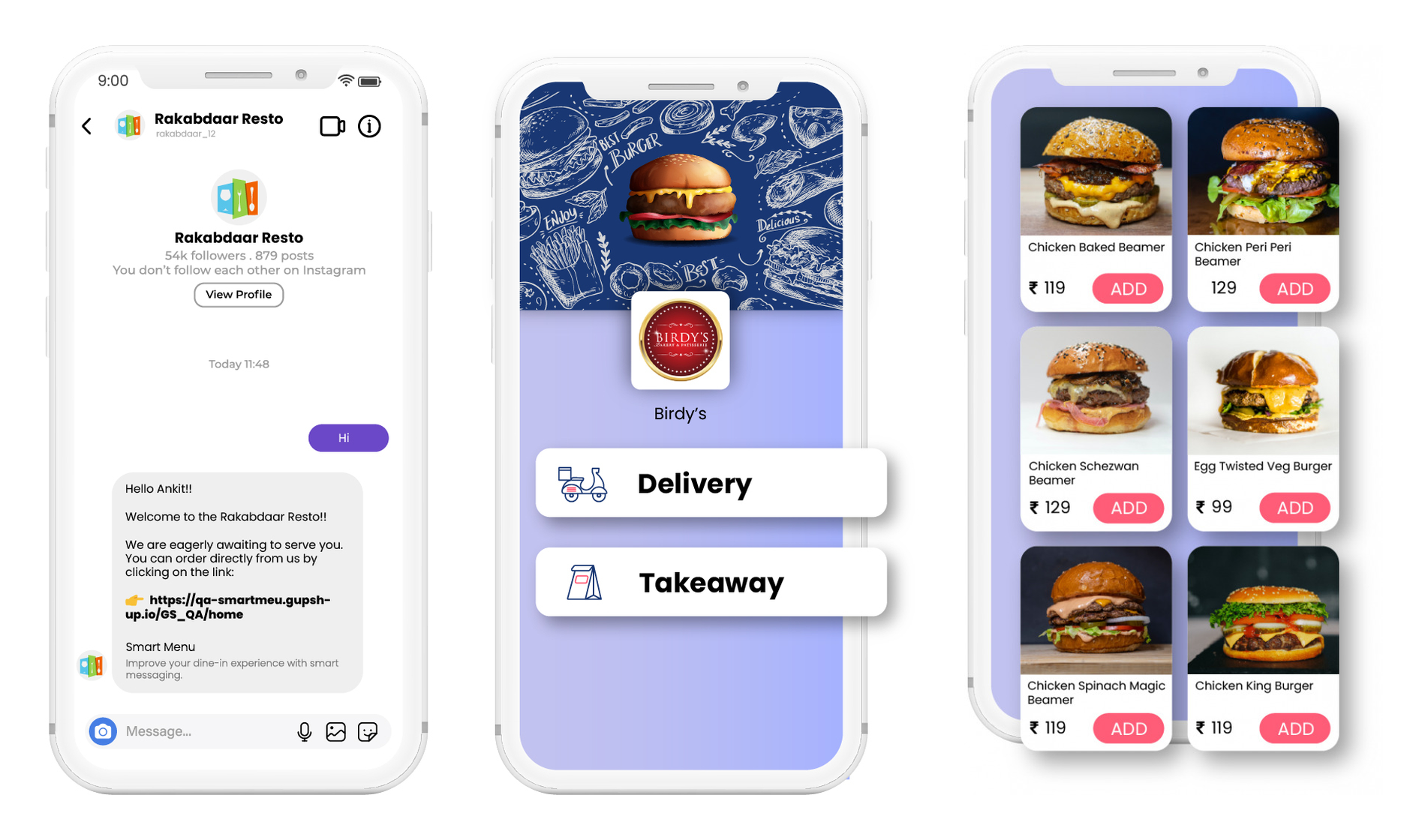
First, guests can order food simply by sending a message on WhatsApp, Instagram, or your website. The AI agent greets them, shares the menu, and lets them add dishes to the cart with a single tap.
With a WhatsApp API-based ordering system, guests can:
- Browse the menu and add items to the cart
- Choose home delivery or takeaway
- Save multiple delivery addresses at checkout
- Pay with their preferred method, including UPI, cards, and WhatsApp payments where available
In addition, one platform connects you to several messaging channels, including WhatsApp, Instagram, Facebook Messenger, RCS, and SMS, so guests can order wherever they prefer.
2. Targeted Promotions

Next, the AI agent helps you start conversations with new and returning guests from your opt-in database. For example, you can share weekend offers, new menu launches, or festive combos. In short, these messages can focus on marketing, sales, or ideally a mix of both.
3. Personalized Recommendations
Beyond regular promotions, the AI agent suggests dishes based on each guest’s order history and preferences. It then sends these recommendations with a quick prompt to order right away.
Alternatively, guests can ask for suggestions in the chat. After answering a few simple questions, such as “veg or non-veg?” and “spicy or mild?”, they see dishes that match their taste.
4. Real-Time Order Tracking
After payment, the AI agent sends an order invoice. Then, when a guest asks, “Where’s my order?”, it shares a tracking link with the delivery partner’s name, contact details, and estimated arrival time. As a result, your staff gets fewer status calls.
5. Repeat Orders and Brand Recall
In fact, top-of-mind recall matters for every restaurant. So, after each order, the AI agent can send a personalized follow-up message with offers, a survey link, or a reminder to reorder a favorite dish.
6. Invoicing and Payment Collection
The AI agent creates the order summary right inside the chat. In addition, you can connect multiple payment partners, so guests can pay without leaving the conversation.
7. Instant Query Resolution

After all, hungry guests don’t like to wait. That’s why the AI agent resolves common issues instantly, including delivery delays, food quality complaints, billing errors, and order status questions. However, if a problem needs a human touch, it hands the chat to your support team with the full conversation history.
8. Surveys, Feedback, and NPS
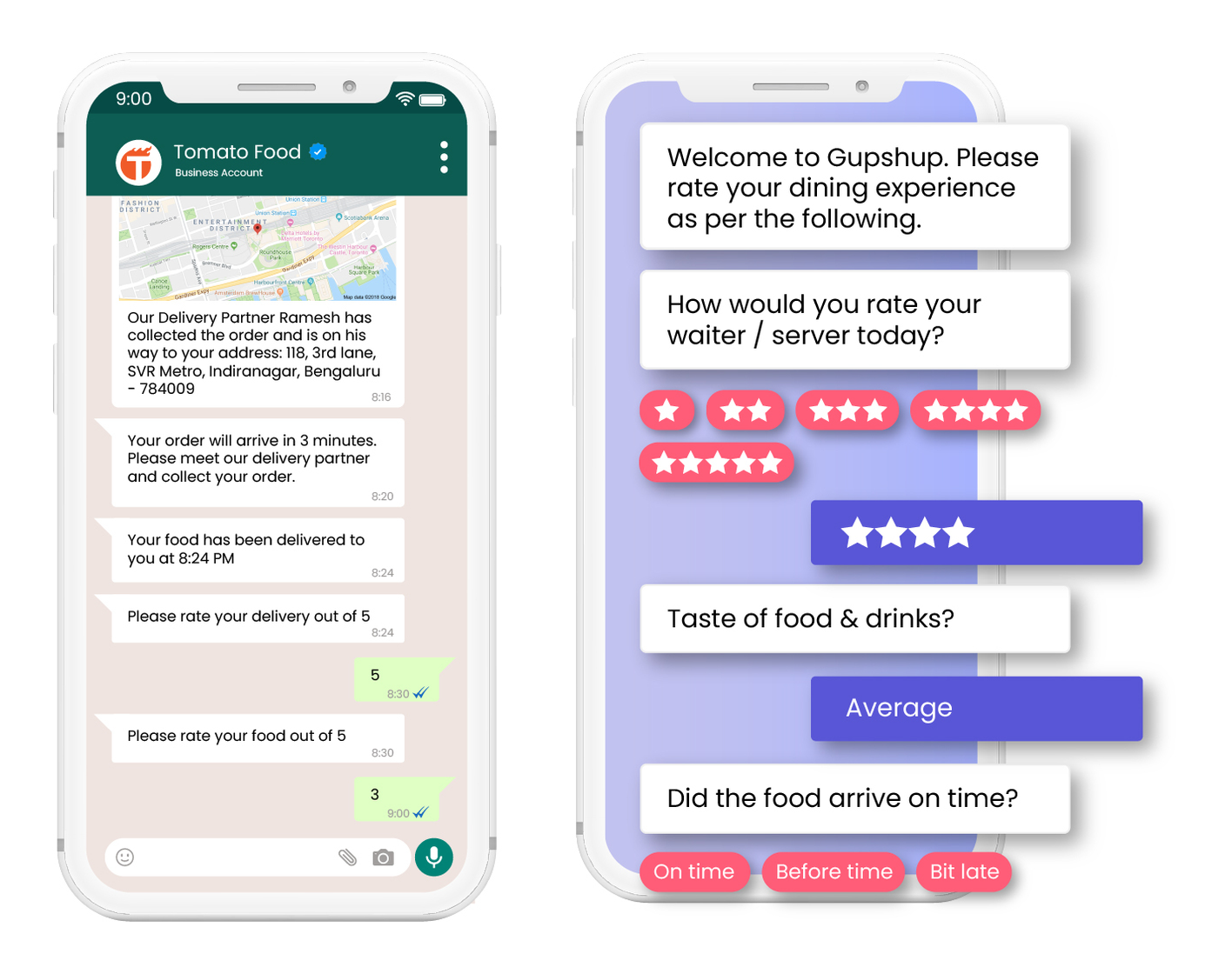
Feedback helps you improve food and service. For this reason, the AI agent asks short, simple questions after each meal or delivery and collects ratings through quick taps. As a result, you can track Net Promoter Score (NPS) and spot issues early.
9. Automated Notifications
Finally, the AI agent sends important updates in real time, such as OTPs, order confirmations, delivery status, cancellations, and refunds. If a guest isn’t on WhatsApp, the same alerts can go out through SMS.
Benefits of an AI Agent for Restaurants
Here’s what restaurants gain with an AI agent:
- 24/7 availability: guests can order, book, and get answers at any hour.
- Faster service: instant replies reduce wait times during peak hours.
- Higher order value: personal recommendations encourage add-ons and repeat orders.
- Lower workload: staff spend less time on calls and routine questions.
- Better guest data: every chat adds first-party insights for future campaigns.
Conclusion
Guest expectations keep rising, and restaurants that respond faster win more loyalty. An AI agent for restaurants handles orders, bookings, payments, updates, and feedback in one conversation, so your team can focus on great food and service.
Gupshup’s AI agents help restaurants, cloud kitchens, and food chains serve guests on WhatsApp and other messaging apps at scale. Ready to upgrade your ordering and guest experience? Book a demo with Gupshup today.
FAQs
What is an AI agent for restaurants?
An AI agent for restaurants is an AI assistant that chats with guests on WhatsApp, websites, and messaging apps. It takes orders, books tables, recommends dishes, collects payments, shares delivery updates, and resolves complaints 24/7, and it passes complex issues to staff.
How do restaurants use AI agents?
Restaurants use AI agents to take food orders, manage table reservations, answer menu and timing questions, send offers, track deliveries, collect feedback, and handle refunds or complaints through chat.
Can an AI agent take restaurant orders on WhatsApp?
Yes. With the WhatsApp Business API, an AI agent can share your menu, take orders, confirm delivery or takeaway, collect payment, and send order updates, all inside WhatsApp.
Can an AI agent handle restaurant reservations?
Yes. Guests can ask for a table in a chat, and the AI agent checks availability, confirms the booking, sends reminders, and handles changes or cancellations.
Will an AI agent replace restaurant staff?
No. An AI agent handles repetitive tasks like order taking, FAQs, and status updates, so staff can focus on cooking, hospitality, and complex guest needs. Plus, it hands conversations to a human when needed.
Is an AI agent expensive for small restaurants?
Not necessarily. Many platforms offer flexible pricing, and an AI agent can pay for itself by capturing more orders, increasing repeat visits, and reducing time spent on calls.

Product Marketing Manager