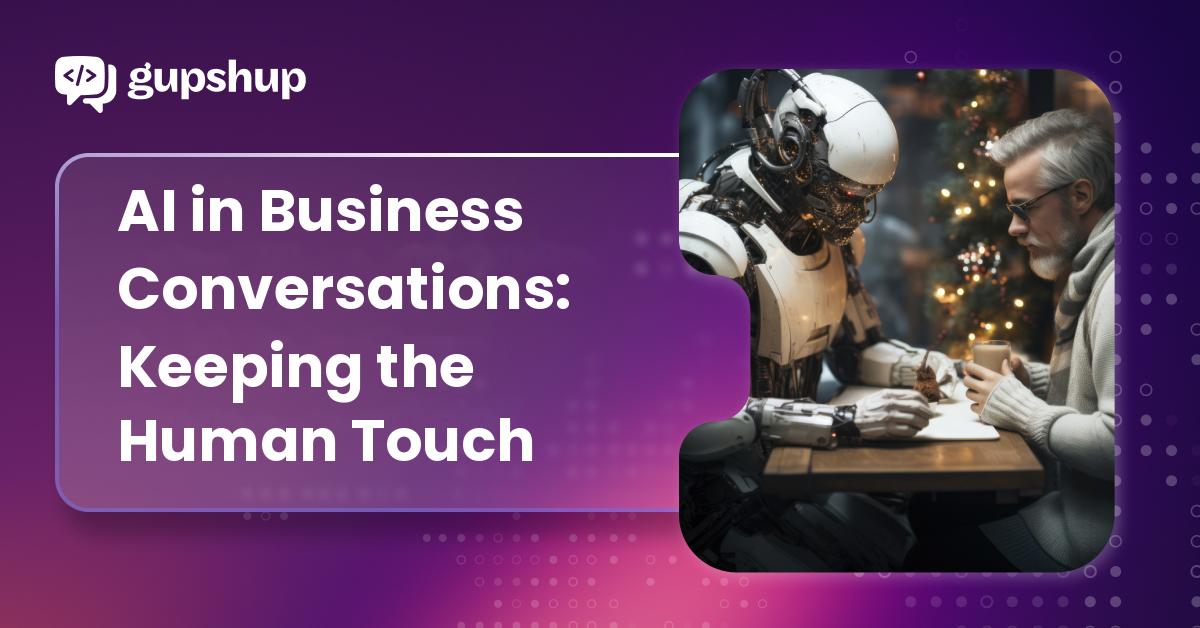
Remember walking into a store where someone greeted you by name, or shared a friendly word at checkout? Those personal touches built lasting relationships.
Today’s businesses have countless tools promising smarter workflows; from grocery shopping to big-ticket purchases like cars or jewelry, everything is becoming increasingly virtual.
Yet customer expectations haven’t caught up with that shift. Shoppers navigating virtual aisles still want the warmth of human interaction, even from AI-driven systems.
Business leaders overwhelmingly see AI and automation as essential to their operations, while many customers report frustration when an experience feels too impersonal.
That gap is exactly why AI in business conversations has to mean more than automation for its own sake; it has to build real relationships while it streamlines operations. Here’s how to do both.
Proactive Chatbots and Personalized Experiences
Chatbots used to react only after a customer initiated contact. Modern ones take the initiative, starting conversations based on user behavior and data, which makes the journey feel personal instead of scripted.
This matters most alongside click-to-WhatsApp ads, which open a direct conversation from a social ad the moment a customer engages. If a customer keeps checking out a product but doesn’t buy, a proactive chatbot can send a personalized reminder or discount directly through WhatsApp, keeping the product top of mind without feeling like a mass blast.

The same logic applies after purchase: care tips, related products, or a feedback request based on someone’s actual purchase history, not a generic follow-up. That’s what turns a transaction into a relationship.
Building Empathy and Authenticity
Chatbots today aren’t just scripted responders; they recognize emotional cues and respond appropriately – what experts call ‘artificial empathy.” Consider a customer frustrated over a delayed order:
“I totally understand why you’re upset, and I’m here to sort this out quickly for you. Let’s track your order and see how we can expedite it.”
An empathetic chatbot like this, built on natural language processing, reads tone and content, then responds with an update, an apology, and an offer to make things right. It also remembers past interactions, so if it already resolved an issue once, the chatbot can reference that resolution later instead of treating the customer like a stranger.
Train AI with Brand-Specific Data
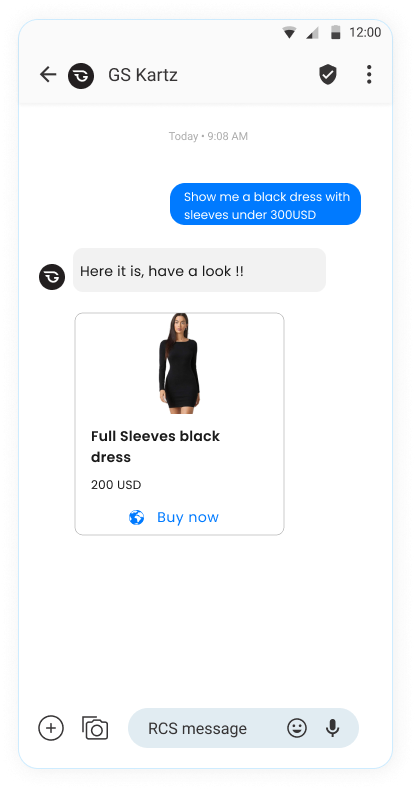
Training AI on brand-specific communications, emails, support tickets, and chat logs lets it learn and mimic your brand’s actual voice, not a generic one.
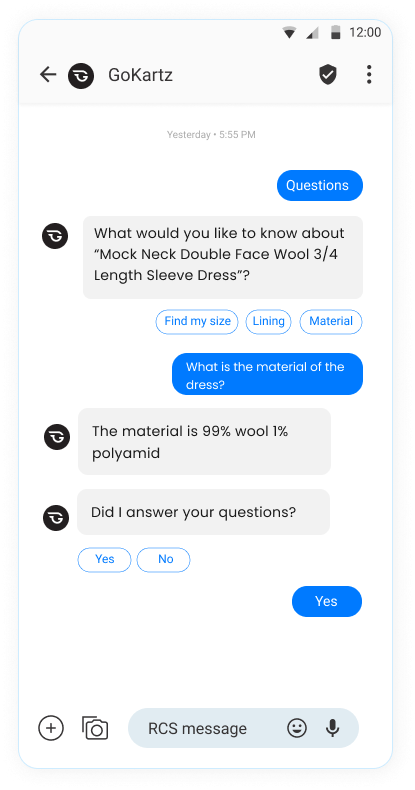
A Swiss luxury fashion brand did exactly this with Gupshup’s conversational AI. Its digital shopping assistant delivered personalized service across the webshop, Facebook, WhatsApp, and in-store channels, guiding customers with question prompts and confirming it had actually answered their question, much like a skilled sales associate would. The result: an 8.5% lift in conversion.
Feedback Loops Build Trust
Even the best AI still needs a human hand to keep content engaging and error-free; editing AI output is essential, not optional polish. Asking for feedback conversationally, right after resolving an issue, is part of that:
“Thanks for letting me assist you today! Could you spare a moment to rate your experience? Just type ‘great,’ ‘good,’ or ‘needs improvement.'”
That loop does two things at once: it surfaces exactly where the AI is falling short, and it shows customers someone is actually listening.
Why AI Ethics Still Matters
Trust in AI depends on transparency. According to IBM, trustworthy AI rests on five principles: transparency, explainability, fairness, robustness, and privacy. Those aren’t abstract; they’re what make customers comfortable trusting an AI system with their data and their questions in the first place, and what keeps a business compliant as regulations catch up with the technology.
Crafting Smarter AI in Business Conversations
Gupshup’s Conversation Cloud puts all of this into one platform: AI-powered tools that keep conversations seamless and personalized across the full customer journey, and it connects WhatsApp, SMS, and social media so customers can reach you wherever they already are.
Natural language processing and machine learning automate content generation and manage responses intelligently, while built-in analytics show what’s actually working instead of leaving you to guess.
Conclusion
AI in business conversations isn’t a passing trend, it’s the strategy for humanizing digital dialogue at scale. Real-time, data-driven insight is what makes interactions feel relevant instead of automated, and choosing AI tools that reflect your actual brand voice is what makes them believable.
The businesses that blend AI sophistication with a human-centered approach are the ones that will define what customer relationships look like next.
Jaitashri is a content and social media marketer. Through insightful and data-driven content, she enables her audiences to leverage the potential of B2B SaaS products. Beyond writing, she's a culinary explorer, avid reader, and passionate painter, infusing creativity into every endeavor.
 +91-9355000192
 Login
Login