+91-9355000192
 Login

Conversational AI Website Monetization: Can It Drive Revenue?
- 8 Ways Conversational AI Helps a Website Generate Revenue
- Why Conversational AI Website Monetization Matters Now
- How Each Conversational AI Monetization Mechanism Works
- Conclusion
- FAQs
See the power of intelligent conversations for your brand.

Yes, conversational AI can monetize a website. AI chatbots replace passive browsing with guided, two-way conversations, so businesses can capture leads, reduce cart abandonment, upsell at the right moment, and close sales that static pages miss. That’s the core of conversational AI website monetization. The sections below explain how each mechanism works and what it takes to implement it.
8 Ways Conversational AI Helps a Website Generate Revenue
Conversational AI helps websites generate revenue through eight proven mechanisms:
- Click-to-chat ads move buyers from social feeds into a live WhatsApp conversation.
- Lead qualification spots high-intent visitors and personalizes follow-up in real time.
- In-chat e-commerce lets customers browse, ask questions, and buy without leaving the conversation.
- One-stop checkout removes friction and cuts cart abandonment with timely reminders.
- In-chat payments let customers pay in a single click.
- Subscription prompts turn one-time buyers into recurring revenue.
- Personalized discounts recover dissatisfied customers and drive repeat purchases.
- Quizzes, polls, and games on WhatsApp keep customers engaged and send traffic back to your site.
Each mechanism is explained in detail below.
Why Conversational AI Website Monetization Matters Now
Chatbots are moving from a support add-on to a primary channel. In its July 2022 press release, Gartner Predicts Chatbots Will Become a Primary Customer Service Channel Within Five Years, Gartner forecast that by 2027, roughly 25% of organizations will use chatbots as their primary customer service channel.
When the same channel that answers questions can also recommend, sell, and collect payment, it becomes a revenue channel. Messaging platforms like the WhatsApp Business API make that possible for customers of all ages, on an app most of them already use every day.
How Each Conversational AI Monetization Mechanism Works
Here’s how conversational AI for businesses turns each of those eight mechanisms into revenue.
1. Click-to-Chat Advertisements
A customer browses a product on an e-commerce site, then sees a related ad while scrolling Facebook or Instagram. That ad carries a Click-to-Chat option. One tap opens a WhatsApp conversation with your business, an excellent way to acquire new customers. Meta’s Click-to-WhatsApp ads documentation explains how these ads route people straight into a chat thread.
Once customers reach your WhatsApp chatbot, you can learn what they need and offer a personalized shopping experience.
2. Lead Generation and Qualification
Conversational AI chatbots understand human language and personalize content to each visitor’s needs. By combining natural language processing (NLP), speech recognition, and machine learning (ML), they can ask qualifying questions, score intent, and pass hot leads to sales in real time.
That’s the foundation of lead generation with conversational AI. Every qualified lead captured in a chat is one your sales team doesn’t have to chase cold.
3. In-Chat E-Commerce
When customers get notified about something they’ve been looking for, they’re more likely to take an interest, or better still, buy it.
Say a customer has been looking for jeans. He may receive a WhatsApp message like this:
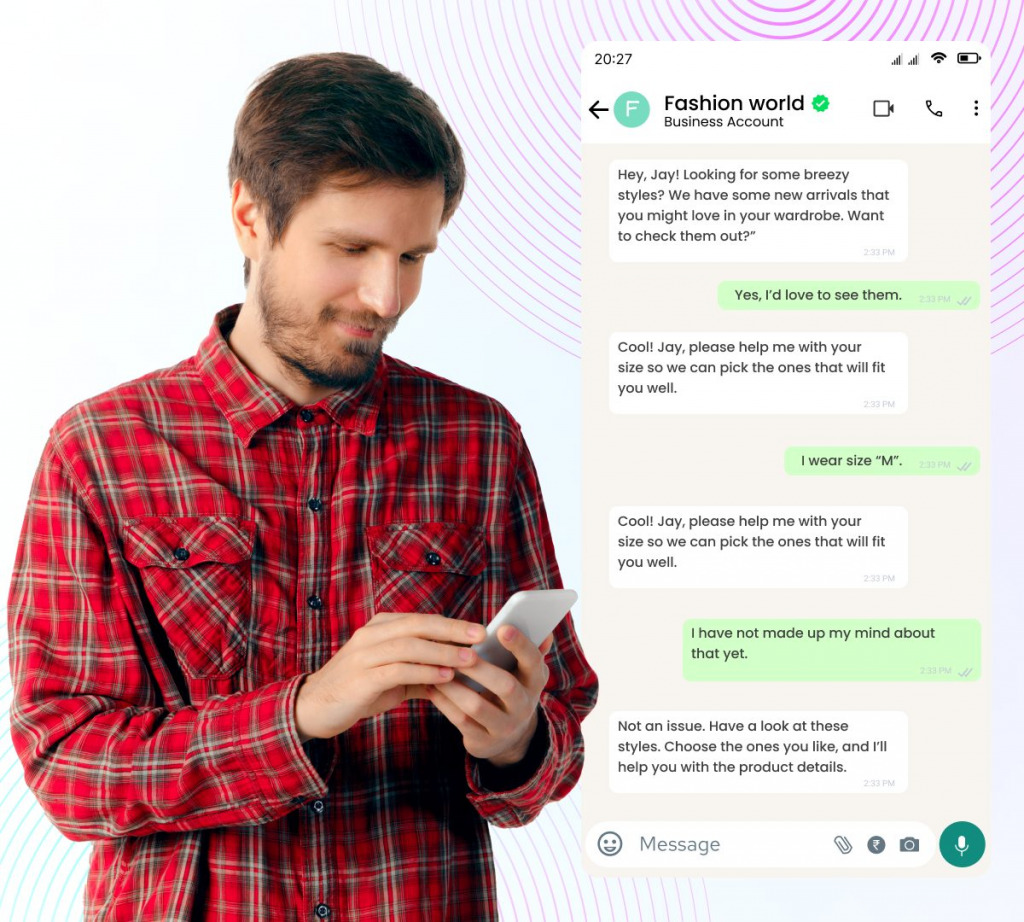
A conversation like this feels like talking to a human agent on the other side of the screen.
A conversational AI-powered chatbot can greet customers on a landing page, answer their queries on the same platform, and recommend products that match their interests. Our guide to conversational AI in e-commerce has more examples.
4. One-Stop Checkout That Reduces Cart Abandonment
Back to our jeans shopper, Jay. He’s picked a product from the chatbot’s list and is about to pay. First, he wants to check the size chart.
He switches to another window, starts browsing similar products, and never returns. If he doesn’t click “Complete your order,” that’s lost revenue. It happens constantly: Baymard Institute’s cart abandonment research puts the average online cart abandonment rate at about 70%.
Design your chatbot to support customers through every phase of the purchase journey. WhatsApp API allows Jay to check the size chart and ask questions without leaving the conversation. Here’s how conversational AI fixes cart abandonment.
Case study: Wow! Momo. The Indian quick-service restaurant chain built end-to-end ordering on WhatsApp with Gupshup: menu browsing, ordering, payment, and delivery tracking, with no app download required. According to the Wow! Momo case study, 40% of its business now comes from repeat orders, 55% of orders come through direct channels (WhatsApp and outlets), and the brand has built a base of 2.9 million opted-in WhatsApp users.
5. One-Click In-Chat Payments
The fewer windows customers switch between, the more likely they are to buy.
Shorten the payment process with interactive message notifications or a payment link that lets customers pay in a single click. Customers tend to pay right away instead of putting it off. For a wider view, read how WhatsApp commerce brings discovery, cart, and payment into one thread.
6. Subscription Offers
Customers love “Prime”-style benefits, and subscriptions give businesses predictable, recurring revenue.
Picture a website chatbot that offers limited perks to non-subscribers and full benefits to members: “Stop paying extra delivery charges! Get our annual GOLD membership for just xxx INR.” Once customers sign up, they’ll want to use it again and again.
7. Personalized Discounts and Promo Offers

A conversational AI platform lets you offer promotions to each customer segment based on what they’re looking for or what would win them back.
Say a customer orders from a food delivery app and isn’t happy with the quality. He shares the complaint through the chatbot. The chatbot picks up the sentiment behind the complaint and offers a redeemable coupon for his next order. That nudge brings him back, and you recover revenue you might have lost. This is how conversational AI wins back lost customers.
8. Quizzes, Polls, and Games on WhatsApp
A food delivery business wants more orders. Instead of another plain promotional text, it runs a quiz: answer three questions correctly and unlock 20% off on a minimum spend of xxx INR.
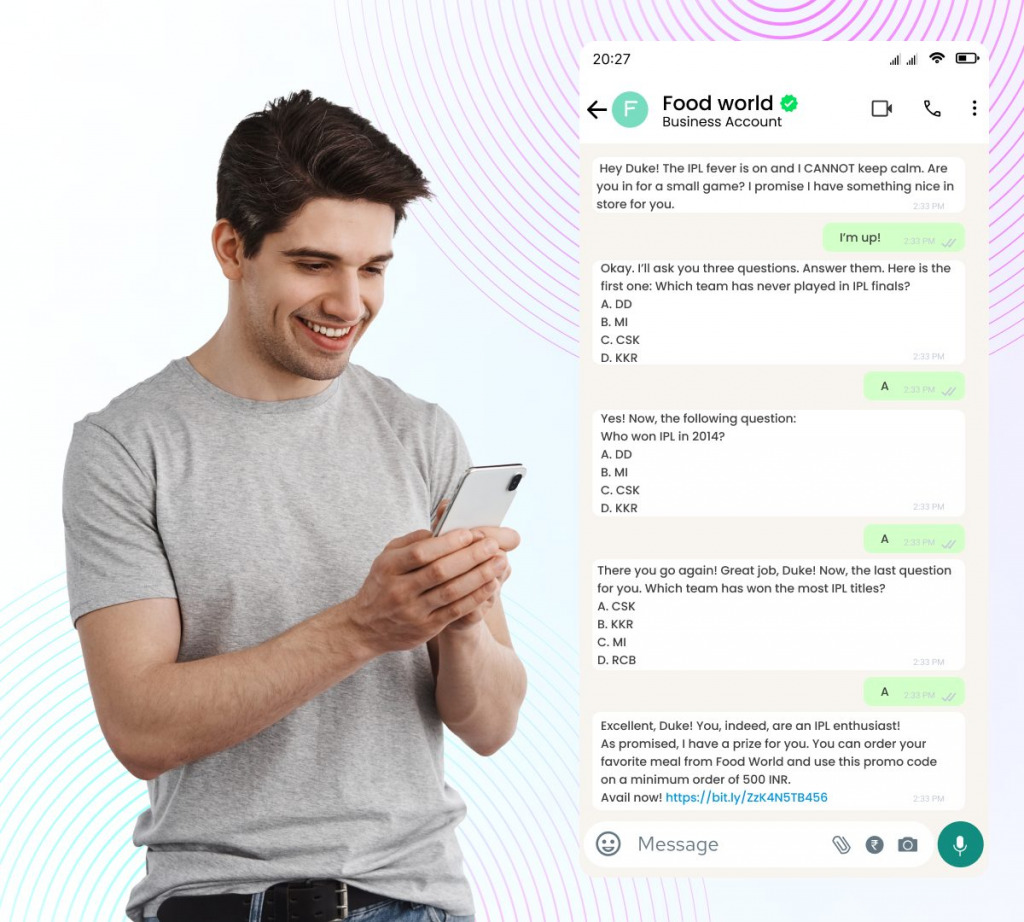
This keeps customers engaged, drives traffic back to the website, and helps improve ROI with WhatsApp marketing. Our post on conversational gamification covers more formats, and these WhatsApp marketing campaign success stories show real brands doing it.
Conclusion
Conversational AI turns a website from a passive brochure into an active revenue channel. The businesses seeing the strongest results deploy chatbots across the full purchase journey, from the first ad click through checkout and post-sale retention, rather than using them only for support.
If your website gets traffic but doesn’t convert it, the gap is usually friction: unanswered questions, slow follow-up, or a checkout that asks too much. A well-configured conversational AI chatbot addresses all three.
Your next step: identify which of the eight mechanisms above matches your biggest revenue leak, and start there. You can build that first bot with Gupshup’s AI agents and run it on the WhatsApp Business API. Request a Demo
FAQs
How do you monetize a chatbot?
Chatbots built with conversational AI talk to customers and collect insights on their interests and preferences. They then send customized offers, recommend products, recover abandoned carts, and accept payments in the chat, all of which boost sales and generate revenue.
What is conversational AI website monetization?
It’s the practice of using AI chatbots and messaging channels such as WhatsApp to convert website visitors into paying customers through personalized recommendations, lead capture, in-chat payments, subscriptions, and targeted offers.
What are the benefits of one-click payments?
One-click payment removes friction from checkout. Merchants see more repeat purchases, higher sales and order volumes, and lower cart abandonment rates.
How does offering discounts help a business?
Discounts drive sales volume by attracting new customers and bringing back existing ones. With chatbots, companies can send personalized discount offers to the right customer at the right moment and nudge them toward a purchase.

Divya is a multifaceted writer and a journalism graduate. A wordsmith by profession and passion, she crafts compelling narratives as a seasoned content writer while also weaving poetic tapestries in her leisure moments. Whether delving into informational prose or evocative verse, her love for the written word brings finesse to every piece she pens down.