+91-9355000192
 Login

Chatbot for Education: How Chatbots are Enhancing Student Engagement
- What Is a Chatbot for Education?
- How Does a Chatbot for Education Work?
- Why Schools and Universities Are Adopting Education Chatbots
- 7 Benefits of a Chatbot for Education
- Top Use Cases of Chatbots in Education
- Real Example: Khan Academy on WhatsApp
- How to Choose the Right Chatbot for Your Institution
- The Future of Chatbots in Education
- FAQs
See the power of intelligent conversations for your brand.
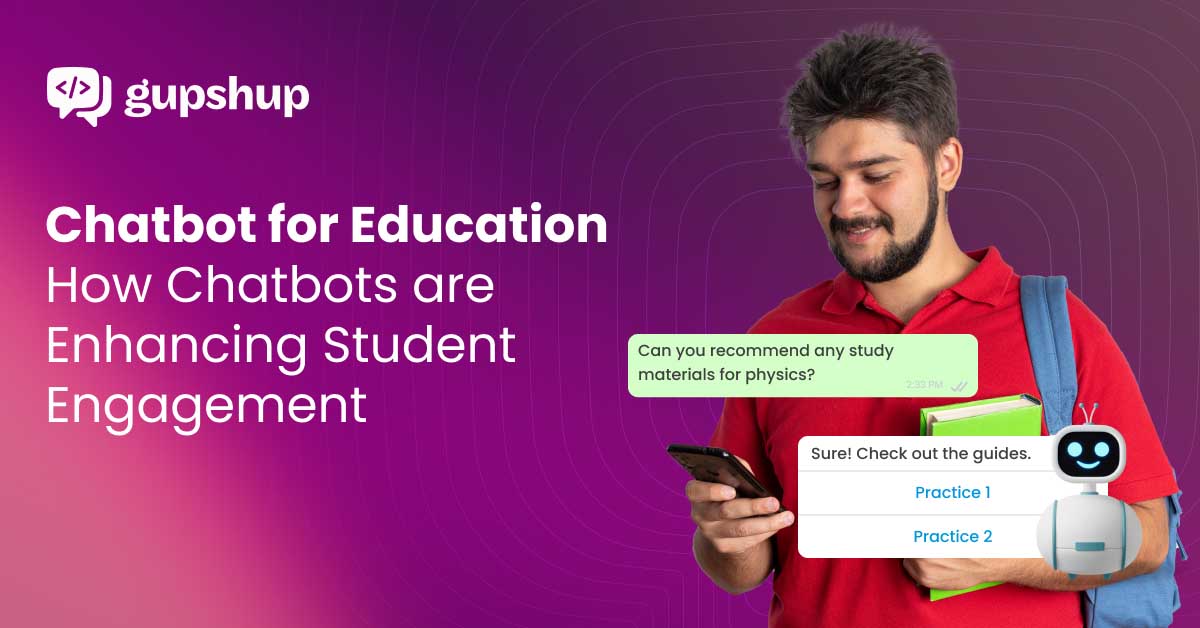
It’s 11 p.m., an assignment is due at 9 a.m., and a student is stuck on one concept. Teachers are offline, the admissions office has shut for the day, and the question just sits there. Meanwhile, the same student gets instant answers everywhere else online. A chatbot for education closes that gap. It answers student questions 24/7, explains difficult topics, sends assignment and fee reminders, and handles routine admin work. As a result, students get help when they need it, while teachers get more time to teach.
What Is a Chatbot for Education?
A chatbot for education is an AI-powered assistant that helps students, teachers, and staff with learning and administrative tasks through chat. It runs on school websites, learning apps, and messaging platforms such as WhatsApp. Using natural language processing, it understands questions in plain language, replies in real time, and adapts its suggestions to each learner’s pace.
For example, a student no longer has to wait until the next day for help with a math problem. Similarly, the same assistant can organize their class schedule and remind them about upcoming tests.
How Does a Chatbot for Education Work?
Today’s education chatbots combine AI and machine learning to hold natural, human-like conversations. In practice, the process is simple:
- A student or parent asks a question on the school’s website, app, or WhatsApp number.
- The chatbot understands the intent using natural language processing, even when students phrase it casually.
- It fetches the right answer from connected systems, such as the course catalog, timetable, or learning platform.
- It replies instantly, or hands the conversation to a staff member when the question needs a human.
Running the chatbot on the WhatsApp Business API means students and parents can reach it on an app they already use every day, with no new downloads.
Why Schools and Universities Are Adopting Education Chatbots
Students already rely on AI for their studies. According to the HEPI/Kortext Student Generative AI Survey 2026, which polled 1,054 UK undergraduates in December 2025, 95% of students use AI in at least one way. However, only 38% say their institution provides AI tools, even though 50% think it should.
The market reflects this demand too. In fact, MarketsandMarkets projects that AI in education will grow from $2.21 billion in 2024 to $5.82 billion by 2030.
For Students
An education chatbot works like a tutor who is always available:
- Need help with a concept? The chatbot breaks it down step by step.
- Struggling to stay organized? It reminds you of deadlines and keeps you on track.
Better still, it personalizes each interaction based on the student’s learning style and progress.
For Teachers
Teachers spend hours answering the same questions and chasing submissions. A chatbot takes over repetitive questions, shares learning resources based on each student’s progress, and sends reminders about fees, quizzes, and tests. Consequently, teachers get more time to connect with students and do what they do best: teach.
For Institutions and Edtech Platforms
For administrators, a chatbot handles admissions queries, guides course registration, and manages fee reminders. That frees up staff and makes processes faster and more accurate. It’s especially useful for institutions with fast-growing student numbers.
7 Benefits of a Chatbot for Education
Beyond saving time, a chatbot for education improves the learning experience in several ways.
1. Higher Student Engagement
Students get answers in seconds instead of waiting for a teacher’s office hours. Because help arrives the moment they’re stuck, learning feels more interactive, and they lose less time to confusion.
2. 24/7 Availability
Students can access materials, check deadlines, or resolve queries at any hour. This is especially helpful for students in different time zones or those balancing jobs and classes. Our complete guide to WhatsApp for education explains how institutions set this up.
3. Administrative Efficiency
Chatbots automate routine tasks like admissions FAQs, scheduling, and deadline reminders. They can even collect fees through one-click payment links. As a result, staff can focus on work that needs a human, and students wait less for information.
4. Personalized Learning
An education chatbot tailors learning paths to each student. For instance, it can recommend specific resources, run short quizzes, and adjust support based on how a student is progressing through the curriculum.
5. Feedback and Analytics
Every conversation creates useful data on performance, engagement, and learning patterns. Educators can then spot where students struggle and adjust their teaching methods or materials.
6. Scalability
Whether a course has 100 students or 10,000, a chatbot answers many queries at once without slowing down. In other words, support quality stays the same as enrollment grows.
7. Multilingual Support
Campuses often serve students from many language backgrounds. A chatbot with multilingual capabilities can reply in each student’s preferred language, which makes learning more inclusive.
Top Use Cases of Chatbots in Education
Here are the most common ways schools and colleges use a chatbot for education today.
1. Student Support and Guidance
Often, the chatbot is the first point of contact for students. It answers frequently asked questions about courses, exam schedules, deadlines, and campus activities, so students get timely help without emailing faculty.
2. Admissions and Onboarding
Admissions involve many steps and documents. A chatbot guides prospective students through application forms, deadlines, and document submissions, so they don’t miss a step. After enrollment, it also helps new students settle in with orientation details.
3. Learning Assistance
Chatbots share study guides, reading links, and practice problems. They also send reminders to complete assignments, which helps students feel more prepared for exams.
4. Classroom Management
Teachers juggle attendance, class materials, and schedule changes. A chatbot automates these tasks, sends reminders, and shares updates about classes and assignments.
5. Administrative Tasks
Fee payments, student records, and meeting schedules take up a lot of staff time. A chatbot handles these duties, reminds students and staff of key dates, and reduces human error.
Real Example: Khan Academy on WhatsApp
Khan Academy, the global nonprofit learning platform, worked with Gupshup to bring personalized messaging to students, teachers, and parents on WhatsApp. According to the Khan Academy case study, the project included:
- NLP-powered bots that answer FAQs and simplify onboarding for students and teachers
- Content translated from English into Kannada, Hindi, and Tamil to reach more learners
- Two-way messaging to collect feedback and reviews
- Faster delivery of assignments, guides, and learning tools
How to Choose the Right Chatbot for Your Institution
Finding the right chatbot for your school or college comes down to six checks.
Customization
Every institution is different, so your chatbot should be too. Look for one you can adapt to your courses, campus processes, and tone of voice. A no-code tool like Gupshup’s Conversation Builder lets your team design flows without depending on developers.
Integration With Existing Systems
Your chatbot should connect easily with your learning management system, student database, and payment tools. Otherwise, it creates extra work for staff instead of reducing it.
Scalability
As your student body grows, the chatbot should handle more conversations without slowing down, whether you serve hundreds or thousands of learners.
Advanced AI Capabilities
Choose a chatbot with natural language processing and machine learning. These let it understand context, learn from past conversations, and give more accurate answers over time.
Ease of Use
Students, faculty, and staff should all find it easy to use. The goal is quick help, not complicated menus or confusing interfaces.
Multilingual Support and Data Privacy
If your campus is diverse, pick a chatbot that speaks your students’ languages. Also, make sure it protects student data and complies with local privacy laws.
Why It Matters
The right chatbot does more than upgrade your tech. It lifts student engagement through personalized support and, at the same time, cuts admin work by automating repetitive tasks. That’s why it’s also a smart way to market your institution with conversational AI during admissions season.
The Future of Chatbots in Education
AI keeps improving, so education chatbots will soon offer even more personalized learning paths and deeper insights into student performance. Institutions that start now will be ready as students’ expectations keep rising.
Ready to bring an AI chatbot to your institution? Gupshup’s AI agents support multilingual conversations, integrate with your existing systems, and work across WhatsApp, web, and apps. Contact Gupshup to get started.
FAQs
Will chatbots replace teachers?
No. Chatbots handle repetitive questions, reminders, and admin tasks, while teachers focus on teaching, mentoring, and supporting students who need extra help. In short, a chatbot is a teaching assistant, not a replacement.
Is it cheating if students use an education chatbot for homework?
Not if you design the chatbot to guide learning. A well-designed education chatbot explains concepts, gives hints, and shares practice questions instead of handing over finished answers. Institutions should still publish clear AI-use policies so students know what’s allowed.
Are chatbots safe for students’ data?
They can be, if you choose carefully. Look for encryption, role-based access to student records, and compliance with local laws such as India’s DPDP Act, the EU’s GDPR, or FERPA in the US. For younger learners, UNESCO’s guidance on generative AI in education recommends extra safeguards, including age limits.
How much does a chatbot for education cost?
Costs depend on conversation volume, channels (website, app, or WhatsApp), and how many systems it connects to. No-code platforms keep setup costs low, while WhatsApp also charges per message based on message type. Most institutions start with one high-volume use case, such as admissions queries, and expand later.
How long does it take to set up a chatbot for a school?
With a no-code builder and ready-made templates, a basic FAQ or admissions chatbot can go live within days. Chatbots that connect to your LMS, student records, or payment systems usually take a few weeks

Jaitashri is a content and social media marketer. Through insightful and data-driven content, she enables her audiences to leverage the potential of B2B SaaS products. Beyond writing, she's a culinary explorer, avid reader, and passionate painter, infusing creativity into every endeavor.