+91-9355000192
 Login

What is a Chatbot: How Can It Help Brands for Better Customer Experience?
- What is a Chatbot
- How Does a Chatbot Work?
- Conversational Engagement vs Conversational Support
- 7 Ways Chatbots Boost Customer Engagement in Latin America
- The Future Is Powered by Chatbots
- FAQ
See the power of intelligent conversations for your brand.

Have your customers ever contacted your business only to hit a language barrier? Or abandoned their cart because they couldn’t find a quick answer about a product? Situations like these cost businesses sales and loyalty every day, and they’re especially common in a region as large and diverse as Latin America. Chatbots fix this. They answer customers instantly, in their own language, on the apps they already use, such as WhatsApp.
Latin America is also one of the most exciting markets to get this right. According to EMARKETER, retail e-commerce sales in the region are forecast to grow 12.2% in 2025 to about $191 billion, making it the world’s fastest-growing e-commerce market. As a result, brands that offer fast, personal support will win a bigger share of these shoppers.
What is a Chatbot
A chatbot is a software program that talks with people through text or voice, usually on websites, apps, and messaging platforms like WhatsApp. It understands what a customer asks and replies instantly, much like a chat with a helpful person. Businesses use chatbots to answer questions, recommend products, track orders, book appointments, and hand complex issues to human agents.
Many businesses run their chatbots on WhatsApp because customers already use it every day. If you’re new to the idea, our beginner’s guide to WhatsApp chatbots explains the basics.
How Does a Chatbot Work?
In simple terms, a chatbot works in four steps:
- The customer sends a message, such as “Where is my order?”
- The chatbot reads the message and works out what the customer wants.
- It finds the answer from a set script or from connected business systems, such as your order database.
- It replies instantly, or passes the chat to a human agent when needed.
Types of Chatbots
There are two main types of chatbots, and each suits different needs.
Rule-Based Chatbots
Rule-based chatbots follow a script. They answer frequently asked questions or give step-by-step instructions based on keywords or button choices. In other words, the customer’s choices guide the conversation.
Although they’re less flexible than AI chatbots, rule-based bots handle large volumes of simple questions well. They also give consistent answers and cost less to build.
AI-Powered Chatbots
AI-powered chatbots use conversational AI to understand what customers mean, even when they don’t use the exact right words. They also learn over time, so conversations feel more natural, almost like chatting with a real person.
Conversational Engagement vs Conversational Support
So, how do chatbots improve customer experience? It comes down to two ideas.
Conversational engagement means using chatbots to start meaningful conversations with customers on websites and messaging apps like WhatsApp. For example, a chatbot can answer product questions or guide shoppers through a purchase.
Conversational support, on the other hand, focuses on customer service. When customers need to track an order or fix a problem, a chatbot handles it quickly, which frees human agents for complex issues.
7 Ways Chatbots Boost Customer Engagement in Latin America
Chatbots are no longer a futuristic idea. Instead, they’re a practical tool that helps brands connect with customers across Latin America. Here’s how.
1. Around-the-Clock Support
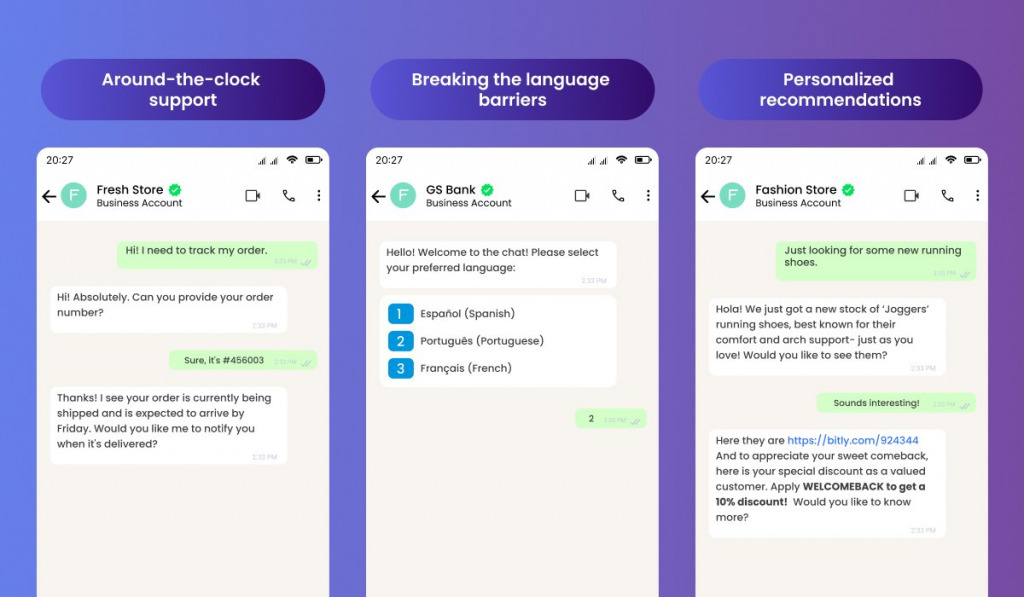
Latin America spans several time zones, so customers reach out at all hours. Chatbots offer 24/7 customer support, whether shoppers want product details or an order update. As a result, customers stay less frustrated and trust your brand more.
2. Breaking Language Barriers
The region is home to many languages and dialects. Chatbots can reply in Spanish, Portuguese, English, and other languages, so every customer understands the conversation clearly. This multilingual approach builds trust and stronger relationships.
3. Personalized Recommendations
People in Latin America spend a lot of time online. In Brazil alone, DataReportal counted 185 million internet users in late 2025, or nearly 87% of the population. Yet many shoppers still see generic product suggestions.
Chatbots change that. With customer consent, they learn buying habits and preferences, and then recommend the right products. For example, say Pedro from Mexico often buys athletic wear on his phone. A chatbot can greet him by name, suggest new workout gear based on his past purchases, and even offer an exclusive discount. This kind of personalization builds loyalty and lifts sales.
4. Simpler Processes
Everyone has struggled to book an appointment or track an order on their phone. Chatbots remove this frustration by handling repetitive tasks inside a familiar app.
For instance, a patient in Colombia can reschedule a dental appointment through the WhatsApp Business API in just a few taps. That saves time for both the patient and the clinic staff.
5. Fewer Abandoned Carts
Many shoppers fill a cart and then leave without paying. In fact, Baymard Institute puts the average cart abandonment rate at about 70%. Chatbots help by spotting abandoned carts and sending friendly reminders.
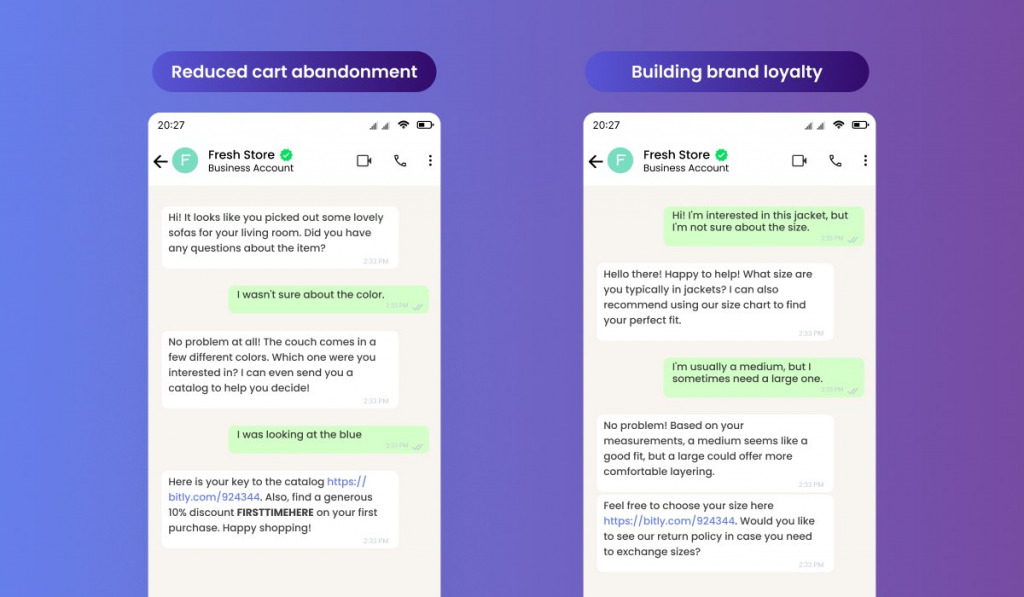
Picture a shopper in Brazil who fills a cart with furniture but hesitates at checkout. A chatbot can send a gentle reminder with product details or a special discount, which encourages them to complete the purchase.
6. Faster Resolutions, Happier Customers
Nobody likes waiting on hold. Chatbots answer simple questions immediately and resolve common issues in seconds. For example, a customer in Peru with a warranty question gets an instant answer or a real-time order update. Consequently, satisfaction rises and your brand looks more reliable.
7. Stronger Brand Loyalty
A good chatbot experience leaves a lasting impression. When customers get fast, helpful answers, they trust your brand more and come back again. On top of that, AI chatbots can read the tone of a question, spot confusion, and suggest the right product, which helps remove friction and boost sales.
Brands like OYO have used conversational engagement to serve global customers at scale.
The Future Is Powered by Chatbots
For brands in Latin America, chatbots offer a major opportunity. They provide 24/7 multilingual support, answer questions instantly, and personalize the customer journey. In turn, wait times drop, teams work more efficiently, and customers stay happier.
Imagine one chatbot working across your website, social media, and messaging apps like WhatsApp, always ready to help. Gupshup makes this simple. With our no-code Conversation Builder, you can build AI-powered chatbots without deep technical skills.
Whether you want to automate support, sell through conversations, or nurture leads, Gupshup’s AI agents can help. Book a Demo today!
FAQ
What is a chatbot in simple words?
A chatbot is a computer program that chats with people. You type or speak a question, and it replies instantly, like texting with a helpful assistant. Businesses use chatbots on websites and apps like WhatsApp to answer questions and help customers 24/7.
What is an example of a chatbot?
A common example is a store’s WhatsApp chatbot that tells you where your order is, suggests products, or helps you book a delivery slot. ChatGPT is also a well-known AI chatbot, although businesses usually build their own chatbots trained on their products and policies.
How much does it cost to build a chatbot?
The cost depends on complexity, features, channels, and integrations. Simple rule-based chatbots built with no-code tools cost little, while AI chatbots connected to your systems cost more. Also, plan for ongoing maintenance and updates. Contact Gupshup to explore flexible plans that suit your needs.
Can a chatbot speak Spanish and Portuguese?
Yes. Modern AI chatbots can understand and reply in Spanish, Portuguese, English, and many other languages. This makes them ideal for brands serving customers across Latin America.
Are chatbots secure?
They can be, if you set them up properly. To keep data safe:
- Choose a secure platform that encrypts data and follows privacy laws, such as Brazil’s LGPD, Mexico’s data protection law, and the EU’s GDPR.
- Verify users before sharing personal or account details.
- Keep software updated with the latest security patches.
How do I measure the success of my chatbot?
Track these metrics to see how well your chatbot performs:
- Customer satisfaction: collect ratings and feedback after chats.
- Resolution rate: measure how many queries the chatbot solves without an agent.
- Engagement time: see how long customers interact with the bot.
- Cart abandonment rate: check whether reminders bring shoppers back.

Vartika leads marketing at Gupshup and has ~16 years of experience in marketing across early-stage startups and large enterprises. A Marketing specialist by profession, a wanderer at heart, an enthusiastic cook, and a painter for the soul.