+91-9355000192
 Login
Login
Are SMS Messages Still Relevant in 2026?
- Introduction
- Why SMS is Still Relevant in 2026
- 10 SMS Campaign Strategies to Stay Relevant in 2026
- How Enterprises Are Migrating Smartly in 2026
- Conclusion: Reimagining SMS in 2026
- FAQs
See the power of intelligent conversations for your brand.

Introduction
Does SMS still work?
Recently, this question has changed to: whether your organization is using it intelligently or not. While app notifications and emails struggle to grab attention in ever-more crowded inboxes, SMS for business continues to deliver fast and reliably.
If you believe in statistics, you already know that around two-thirds of the global population still send and receive SMS regularly, as its open rates continue to hover above 98%, and 95% of texts are read within three minutes. It contrasts with email, which often struggles with an open rate of around 42.35% and significantly lower engagement.
Far from being obsolete, SMS has become more strategic, particularly when delivered via modern SMS APIs that support outbound and inbound SMS, real-time reporting, and personalization at scale.
This blog shows why SMS for business still remains as one of the most important mediums of customer engagement and what you should consider when rethinking your messaging infrastructure.
| TL;DR
SMS is one of the most reliable and effective communication tools businesses can use in 2026. With near-instant delivery, high open and response rates, and seamless global reach, SMS remains one of the most effective channels for time-sensitive engagement. When powered by a well-built SMS API, it becomes even more powerful, enabling automation, personalization, compliance, and real-time control to scale messaging across marketing, support, and operations. |
Why SMS is Still Relevant in 2026
Since 2020, customer engagement has evolved due to digital acceleration. Email inboxes are more saturated than ever, in-app notifications often go unnoticed, and customers now crave immediacy and relevance.
In this landscape, SMS has carved out a unique niche. With over 7 billion mobile users globally, SMS continues to be one of the fastest and most reliable ways to reach people, even in regions with low bandwidth.
Beyond open rates, SMS drives real results. Click-through rates (CTR) for SMS messages range from 19% to 36%, and response rates hover around 45%, often up to ten times greater than email. This behavior highlights how SMS meets modern customer expectations: quick, clear, and permission-based communication.
But as customer expectations evolve, the need for businesses to scale, automate, and personalize their SMS communication grows. That’s where SMS APIs come in.
How SMS APIs Ensure SMS Stays Relevant in 2026
SMS APIs take the foundational power of SMS and enhance it by enabling automated messaging, scalable personalization, and real-time tracking. Through SMS APIs, businesses can send personalized messages at scale, automate campaigns, and integrate SMS into their broader communication strategies seamlessly.
- Instant, Hyper-Relevant Delivery: SMS APIs trigger messages automatically, ensuring they reach customers within seconds for urgent notifications like OTP validation or real-time offers.
- Compliance and Opt-In Management: SMS APIs automate opt-in and opt-out processes, ensuring compliance with regulations and maintaining trust.
- Scalable Personalization: SMS APIs allow businesses to personalize messages by name, location, or behavior, automating this process at scale.
- Two-Way Interaction: With SMS APIs, businesses can handle inbound replies, conduct surveys, and provide customer support directly through SMS.
- Seamless Automation: From order confirmations to cart reminders, SMS APIs automate messages, saving time and improving customer experience.
Which Organizations Benefit from SMS API?
Fundamentally, any organization with a global or digitally engaged customer base can harness the power of an SMS API. This tool empowers teams across industries to streamline and scale textual communication globally.
- In retail and e-commerce, APIs drive high-impact loyalty alerts, limited-time offers, and abandoned cart messages. Many brands already report that a significant percentage of their revenue, often between 11% and 20%, originates from well-timed SMS nudges. Event-driven sales, coupon drops, or flash stock notifications land quickly and generate measurable impact.
- The hospitality and travel sectors rely on SMS for confirmations and itinerary updates, including flight times, hotel check-ins, and gate changes. These are delivered in near-real time, ensuring travelers stay informed even without a data connection. Airlines, hotels, and travel agencies gain improved brand trust and fewer service issues through this direct channel.
- Financial services, including banks and insurers, now default to OTPs and transaction alerts via SMS. The near-instant delivery and higher read rates support security-sensitive interactions, meeting tight regulatory compliance needs.
- In logistics and delivery, real-time SMS alerts confirm order dispatches, delivery windows, and signature requests. This directness not only minimizes customer disappointment but also optimizes driver routes and feedback loops, eliminating reliance on the app.
- The reach extends further to utilities and public sector organizations that can push outage notifications or payment reminders to users without requiring smartphone apps. Restaurants, NGOs, and small service providers also use SMS for confirmations, updates, and surveys.
The net result is an inclusive communication channel available to virtually anyone with a mobile phone. Let us look into a case study for this:
| Success Story
As OLA expanded into global markets like Australia, New Zealand, and the UK, it needed a unified messaging solution. Gupshup’s single messaging API enables real-time communication with drivers and customers across SMS, voice, WhatsApp, and RCS. It supported both transactional and promotional messaging with link tracking for offers, referrals, and ride feedback. In the UK, Gupshup ensured GDPR compliance with mandatory opt-out links. To protect customer privacy, Gupshup enabled masked communication through a common backend-connected number, preventing direct number sharing. The solution empowered OLA to scale globally while maintaining compliance, efficiency, and trust across regions. |
10 SMS Campaign Strategies to Stay Relevant in 2026
When it comes to business messaging, reliability and control are the foundation. Whether you’re sending order confirmations, security alerts, or updates, you need assurance that messages arrive and that you can monitor delivery and user response. That exact capability is what a modern SMS API brings to the table.
A well-integrated SMS API connects your systems directly to carrier networks, allowing two-way, fully automated messaging without human intervention. To achieve real performance with SMS marketing strategies, you need a structured plan that can effectively translate volume.
Here’s a list of ten tactics that remain highly effective:
- Opt-in clarity: Invite subscribers explicitly (for example, ‘Text NEW ARRIVALS to 34455’). This consent is not just ethical; it’s also required, as it helps foster trust and minimize complaints.
- True personalization: Dynamic variables, like even a first name or purchase detail, can boost engagement. Personalization in CX is expected.
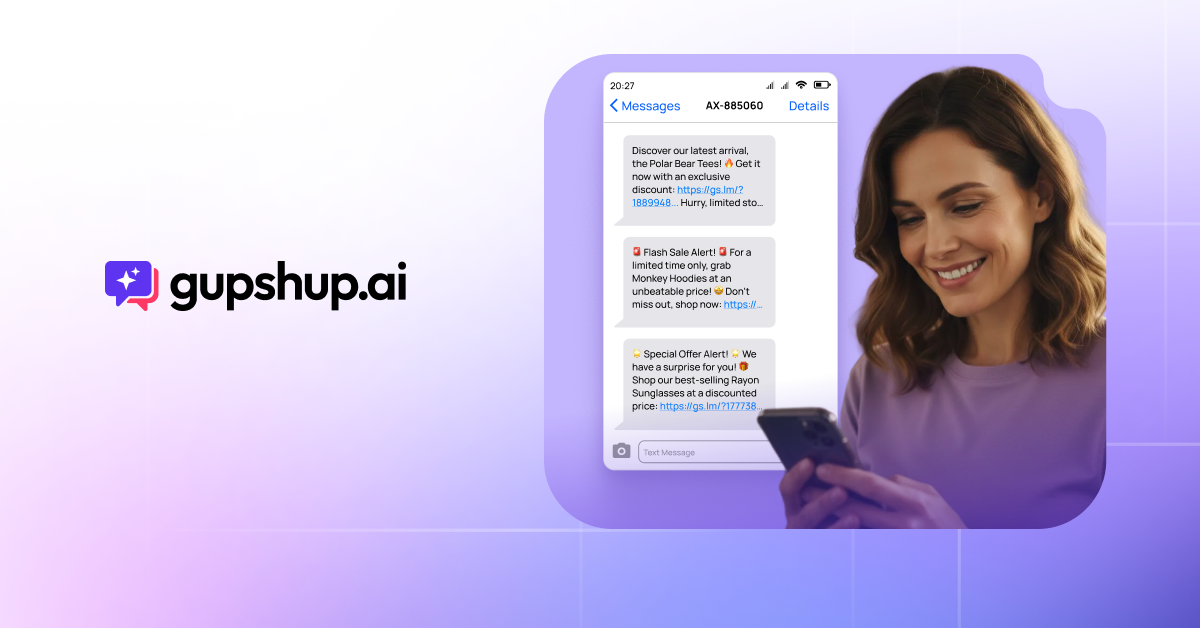
- Leverage scarcity: SMS thrives on urgency. Phrases like ‘Hurry up! Deal ends at midnight’ can double response rates compared to standard campaign language.
- Automate lasting value: Set up journey-based triggers, like cart abandonments or post-purchase upsells, so messaging drives results without manual oversight.
- Enable conversations: Converting SMS into an inbound channel deepens engagement. Whether it’s support or feedback, users respond more when two-way communication is enabled.
- Respect scheduling: The timing of when and where you engage your customer is important. Mid-morning or late afternoon is generally optimal for business communication; however, this approach may not be suitable for an international firm that standardizes its working hours. Localize sends to avoid sleepless nights and irritation.
- Entertain and engage: Polls, trivia, or rich media enhance attention. A fun tone signals that messaging is for interaction, not intrusion.
- Reward loyalty: VIP offers, such as early access and sneak peeks, can reinforce the value of SMS subscribers and justify continued opt-in.
- Measure and adapt: Track everything from SMS opens and clicks to conversions, and A/B test your approach to optimize results. Data reveals what sticks and what falls flat.
- Link channels cohesively: SMS complements social media and apps, and a timely reminder via text can help improve conversions.
Core Features of a Modern SMS API
To deliver powerful, scalable, and compliant messaging at scale, a mature SMS API must offer more than basic send-and-forget functionality. Here are the essentials:
Global Coverage and Direct Carrier Connections
A resilient SMS API platform like Gupshup maintains carrier-grade connections across over 190 countries, optimizing for low latency and high deliverability. This ensures messages arrive consistently, even in regions with varying telecom regulations.
Seamless Long-Message Handling
Long texts should never arrive garbled or in fragments. The best APIs automatically concatenate messages, ensuring recipients receive complete, fluid information without manual intervention.
Real-Time Delivery Reports and Routing Intelligence
Reliable reporting on queued information, sent, delivered, or failed statuses is critical. APIs that support real-time webhooks and adaptive routing help teams monitor throughput, identify bottlenecks, and dynamically improve quality.
Unicode and Character Support
Global communication demands versatility: Unicode support enables messages in local languages and emojis. Intelligent fallback to GSM encoding preserves readability even when character sets vary.
Bulk Queue Management and Rate Control
From marketing blasts to transactional OTP volumes, bulk dispatch must be managed intelligently. A capable API handles message queuing, rate throttling, and traffic control to prevent overloads or bottlenecks.
Rich Media Capabilities
Staying relevant means transcending plain text. APIs that support RCS open doors to interactive visuals, such as images, PDFs, or audio, while maintaining the simplicity of SMS.
Security and Compliance Safeguards
Multi-layered security measures, such as masking phone numbers, purging logs, limiting rates, and automated opt-out handling, ensure adherence to data privacy laws and carrier regulations. This protects customers and brands alike.
Developer-Friendly Integration and Support
A mature API includes thorough guides, clearly annotated code snippets, and language-specific SDKs. A good support ecosystem, ideally around the clock, ensures swift problem resolution and minimal downtime.
| Success Story
Citibank partnered with Gupshup to streamline customer engagement across SMS, WhatsApp, and WeChat using a Smart Messaging API. The solution enabled secure one-way and two-way communication, real-time opt-in/opt-out management, and dynamic link tracking for KYC, account preferences, and card services. Citibank also leveraged Gupshup’s mobile marketing tools for targeted cross-sell campaigns, enhancing customer retention and experience across its global footprint. |
Why These Features Matter
These features represent the operational backbone and strategic muscle of modern SMS APIs. They enable businesses across diverse sectors to send global messages that are reliable, personal, and measurable.
- Global reach with low latency enables worldwide campaigns, while Unicode support ensures cultural resonance, automatically adapting messages based on the user’s locale.
- Delivery reports and analytics inform operational decisions. If one telecom route is congested, fallback routing keeps campaigns live and consistent.
- Bulk processing and queueing enable enterprise-wide workflows, as OTPs, order updates, and reminders are all triggered by events and personalized at scale.
- With concatenation logic, long-form messages (like policy updates or multi-part instructions) remain intact. Rich media enhances engagement through features like electronic tickets, product images, and instructional clips, without compromising the direct nature of SMS.
- Well-documented integration tools and 24/7 support allow cross-functional teams to launch messaging initiatives efficiently.
How Enterprises Are Migrating Smartly in 2026
Effective messaging is built on operational excellence and responsiveness. A capable SMS API should offer global reach and adaptive routing, minimizing latency and ensuring consistent delivery worldwide.
On the other hand, whether confirming attendance, handling survey replies, or routing support queries, your provider must support inbound SMS routing logic so the responses are correctly captured and processed.
Here’s a structured, low-risk pathway aligned with enterprise practices:
Phased Migration with Fallback Routing
Start by routing a small percentage (for example, 5-10%) of traffic through the new API while keeping the existing one active. If issues emerge, fallback routing ensures all messages continue to flow.
API Parity Mapping and Simulation Testing
Replicate existing endpoints, say sendMessage or receiveMessage, with identical parameters. Run simulation tests to validate message formatting, status callbacks, and edge cases (like Unicode handling).
Template Registration and Validation
Pre-register all templates in the new system, especially in regions enforcing pre-approval. Early validation avoids late-stage rejections or compliance failures.
Parallel System Testing (Shadow Traffic)
Mirror live traffic to the new API without actual dispatch. This helps uncover formatting issues, mapping mismatches, or latency gaps before cutover.
Dynamic Routing to Fallback Gateways
Even after migrating, allow dynamic rerouting: if the primary path shows errors or delays, SMS traffic automatically shifts to secondary gateways, maintaining reliability.
Real-Time Logging and Opt-Out Continuity
Track logs from both systems during migration to compare stats. Carry over opt-out databases meticulously to ensure compliance and a consistent customer experience.
Beyond Migration: Orchestrating SMS in a Multi-Channel World
Once SMS systems are modernized, teams can embed them within a larger customer journey thoughtfully and strategically:
Use unified messaging orchestration to send outbound SMS and inbound responses alongside WhatsApp and RCS based on user preference, message type, or geography.
Sync CRM data to populate SMS templates. For example, location-based promos, loyalty reminders, or account-specific alerts become automated and relevant. Also, at-scale personalization hinges on template engines and variable substitution for names, locations, or order details. This drives engagement through relevance.
Conclusion: Reimagining SMS in 2026
SMS isn’t obsolete; it is simply misunderstood and misplaced in your communication cycle. With 82% of messages read within minutes, SMS continues to outperform legacy channels and remains a trusted method for real-time, operational messaging.
Gupshup, as your modern SMS API solution, gives your business unrivaled control, delivery intelligence, and compliance mechanisms that drive real-time customer engagement, protect brand trust, and scale across borders. With programmatic templating, automated retries, real-time delivery reports, and intelligent fallback routing, the right solution brings reliability and personalization to every message.
If you’re ready to elevate your SMS strategy, consider a platform that has proven its ability to deliver across 190+ countries, support two-way messaging, and provide global scalability with low latency. Start your SMS campaigns with Gupshup today.
FAQs
- How do SMS APIs support multilingual campaigns?
Advanced APIs support GSM and Unicode character sets, letting businesses communicate in multiple languages. Some even auto-convert unsupported characters for networks that lack Unicode support.
Can SMS be used for customer support, not just marketing?
Definitely, inbound SMS routing enables customers to reply, initiate support tickets, or provide feedback, transforming SMS into a conversational, service-driven channel.
How does message queuing improve campaign reliability?
Message queuing prevents congestion by efficiently managing large message volumes. It ensures that each SMS is processed in sequence, avoiding delivery failures during high-traffic campaigns, such as product launches or flash sales.
What makes SMS more resilient than internet-based messaging?
SMS doesn’t rely on mobile data or Wi-Fi. It operates through carrier networks, making it ideal in low-connectivity zones or during outages. It is crucial for time-sensitive, business-critical communication.

A marketer who loves turning complex tech into simple stories that customers connect with. He enjoy building go-to-market strategies, scale customer acquisition, and explore how AI can reshape marketing and customer engagement.
Read: Gupshup Named Established Leader in Juniper Research’s AI Agents Report: Here’s What It Means