+91-9355000192
 Login

Conversational AI in Fintech: 7 Use Cases to Improve the Customer Journey
- What Is AI in Fintech?
- Why Fintech Needs a Better Customer Experience
- Why Customer Journey Mapping Matters in Fintech
- Key Challenges for Fintech Companies
- 7 Use Cases of Conversational AI in Fintech
- Benefits of AI in Fintech
- Conclusion
See the power of intelligent conversations for your brand.

Fintech customers want to check balances, apply for loans, finish KYC, and get help in minutes, not days. Yet many still face slow support, complicated forms, limited service hours, and long waiting times, so they drop off before they ever become active users. Conversational AI in fintech solves this. Fintech companies use AI agents on WhatsApp, SMS, and other messaging apps to complete KYC, process loan applications, send transaction alerts, answer questions, and support customers 24/7, in a simple chat.
The opportunity is huge. According to the World Bank’s Global Findex 2025, 79% of adults globally now have an account, and 84% of adults in low- and middle-income economies own a mobile phone. So, messaging is one of the easiest ways to reach and serve the next wave of fintech users.
In this blog, you’ll learn what AI in fintech means, why customer journey mapping matters, the key challenges fintech firms face, and seven practical use cases of conversational AI in fintech.
What Is AI in Fintech?
AI in fintech is the use of artificial intelligence, especially conversational AI agents and chatbots, to make financial services faster, safer, and easier to use. It helps fintech firms onboard customers, verify KYC, process loans, send transaction alerts, detect suspicious activity, answer questions, and support users 24/7 on messaging apps.
Why Fintech Needs a Better Customer Experience
Financial institutions are moving quickly toward digital services. From WhatsApp AI agents to personalized offers, new-age fintechs focus on customer experience. Here’s why:
- Convenience drives loyalty: customers stay with brands that make money tasks easy.
- Younger users are digital-first: they expect to do everything on their phones.
- Personalization is expected: customers want offers and advice that fit their needs.
- Competition is intense: customer-centric design helps fintechs stand out.
However, what many customers actually get is:
- Poor support services
- Complicated procedures
- Limited service availability
- Long waiting times
Why Customer Journey Mapping Matters in Fintech
First, every business has a sales funnel, and a prospect becomes a customer at the end of it. To keep prospects moving forward, you need a smooth user experience. In fact, even the best financial product loses business if the experience is poor.
This matters even more for financial inclusion. Many people still struggle to access or keep using financial services. Therefore, simpler, more user-friendly journeys are key to reaching them.
That’s where customer journey mapping helps. A customer journey map shows how customers interact with your business, which touchpoints matter most, and how they feel at each step. As a result, you can focus your efforts, improve service, and increase sales.
Key Challenges for Fintech Companies
Of course, like every industry, fintech has its challenges. Technology helps only when it’s used the right way.
For example, fintech companies often struggle to build direct relationships with customers, prevent online fraud and account takeovers, and keep teams productive. On the technical side, monitoring suspicious transactions and strengthening account security remain ongoing challenges.
In addition, fintechs want better customer support, stronger loyalty, and smoother interactions. Fortunately, conversational AI helps solve many of these challenges.
7 Use Cases of Conversational AI in Fintech
Here’s how Gupshup’s conversational AI helps financial services companies.
1. Easy Banking Inside Messaging Apps
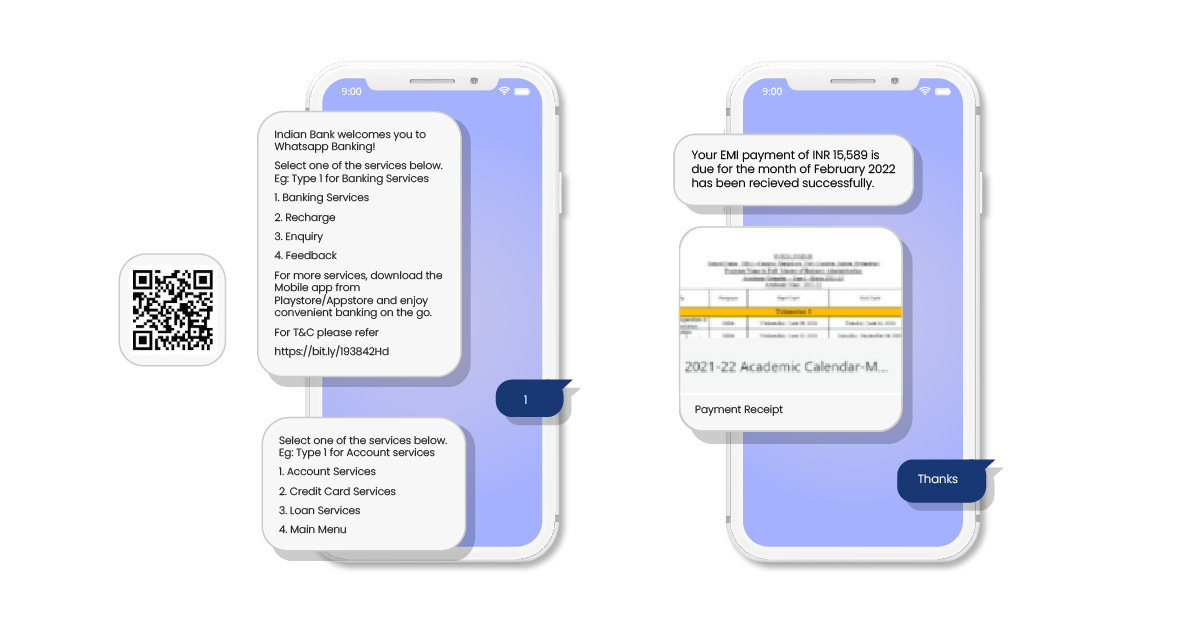
Customers can check balances, view transaction history, track spending, and get account details, just as they would by asking an account manager. Best of all, they do it inside the messaging app they already use. For instance, they can check their credit limit, pay EMIs, and download invoices in a single chat. As a result, banking feels simple, and loyalty grows.
2. Faster KYC
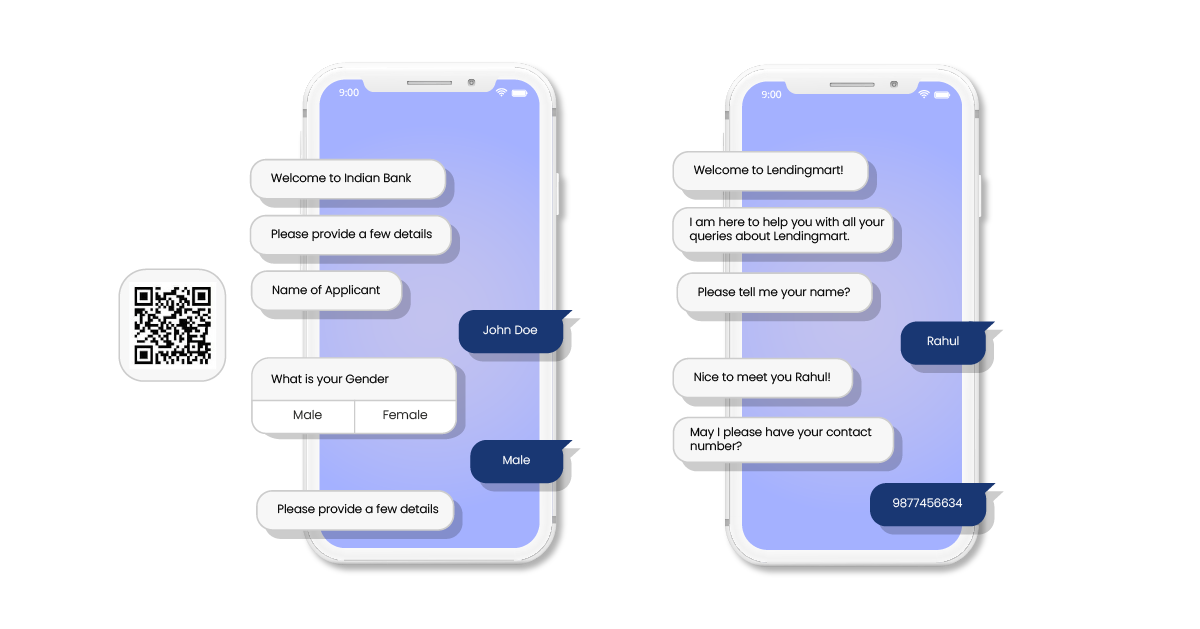
AI agents guide customers through KYC by asking for the right details and prompting them to upload documents. Then, they pass the information directly to your systems through integrations. Consequently, your team no longer needs to update customer records manually.
3. Simpler Loan Applications
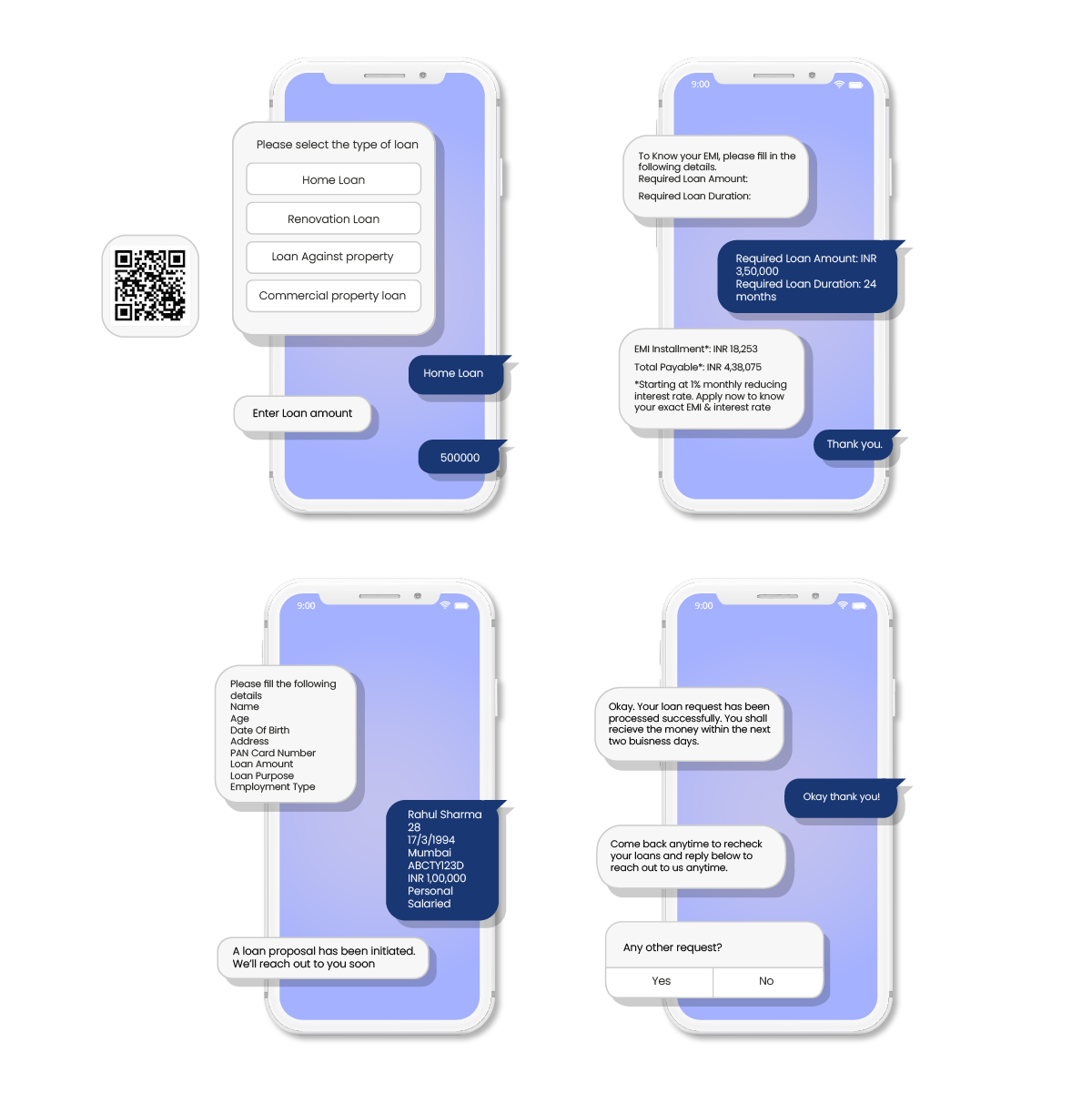
Is your team chasing too many unqualified leads? Is the lending process too slow? AI agents can collect and pre-assess loan applications in a simple chat.
They help borrowers compare loan options, check eligibility, calculate EMIs, and track application status, all within their favorite messaging apps. Therefore, borrowers spend less time applying, and your team focuses on qualified applicants.
4. Real-Time Transaction Alerts

Instead of emails that get lost in crowded inboxes, send transaction alerts on customers’ preferred messaging channels. Customers can also reply instantly to confirm or report a transaction, which helps you act on suspicious activity faster. Learn how conversational AI chatbots help banks prevent fraud.
5. FAQs and Instant Support
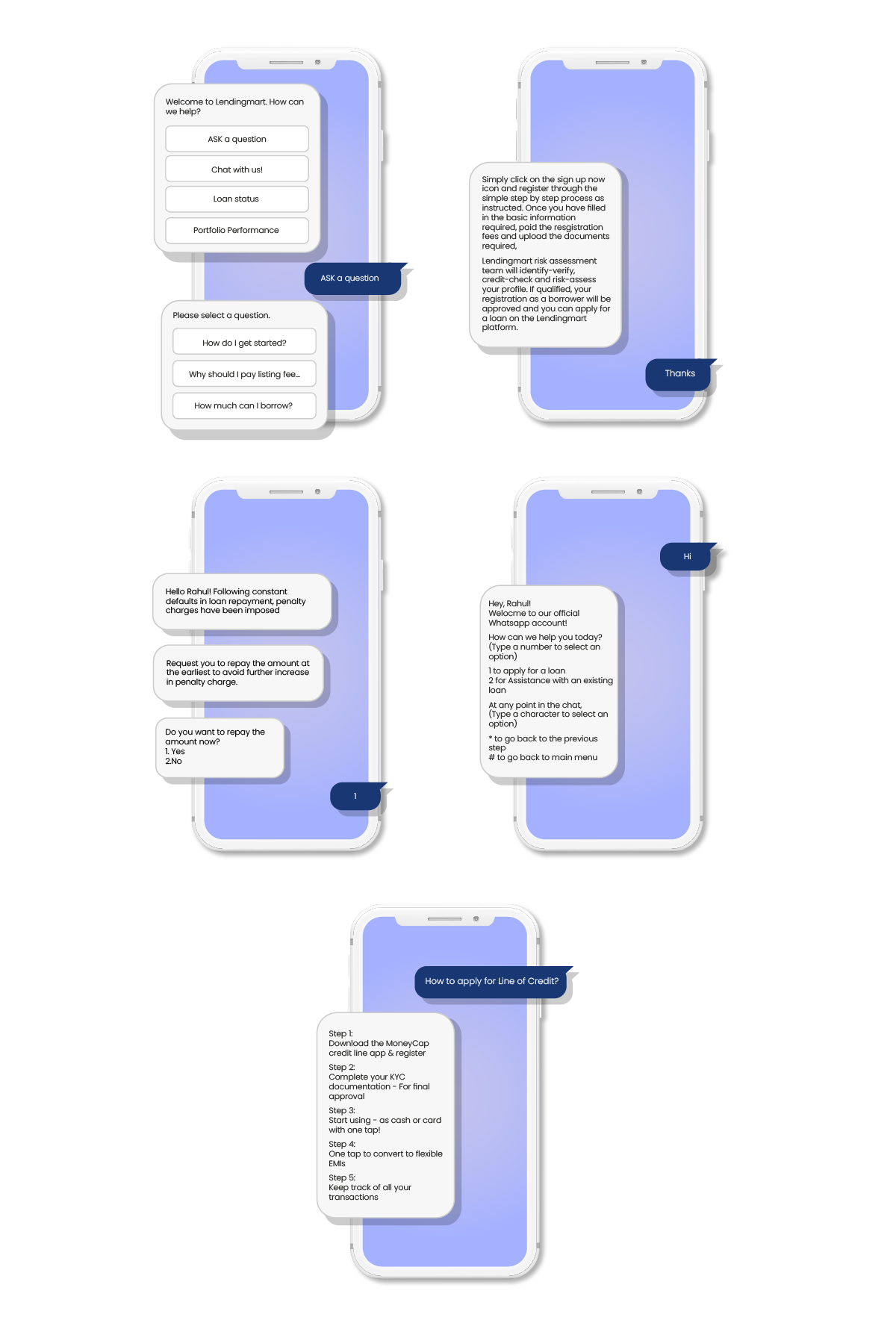
AI agents answer questions faster than human teams and are available 24/7. You can deploy them on the WhatsApp API, SMS, Instagram, and Messenger. They resolve common queries quickly and hand complex issues to human agents with full context.
6. Lead Qualification Across Channels
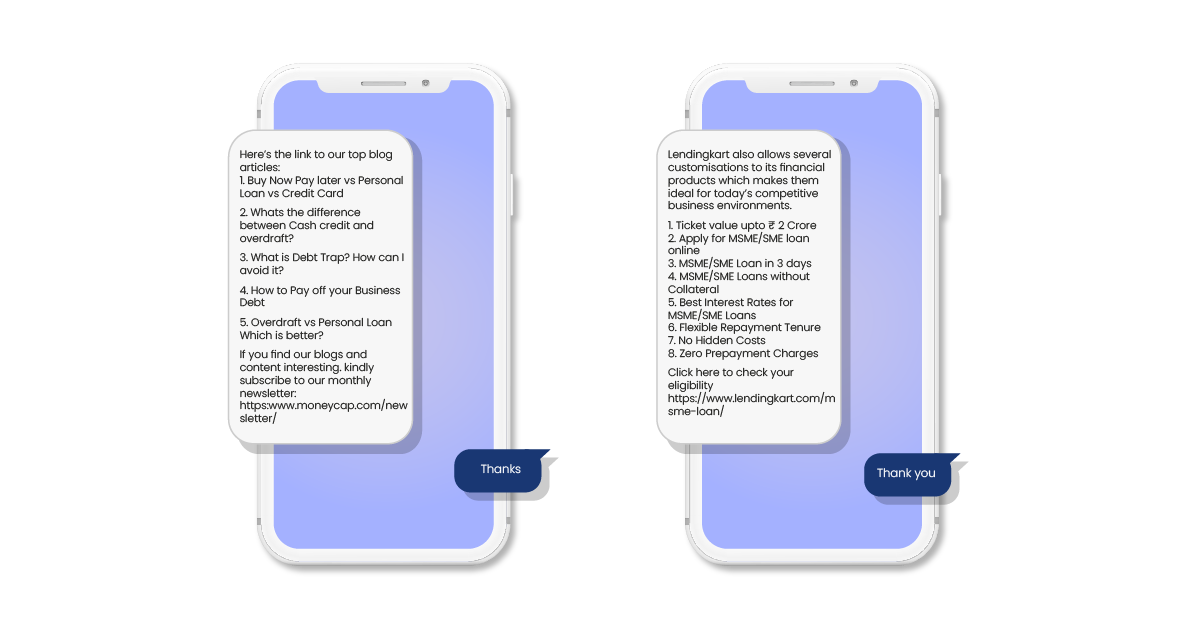
Next, AI agents identify and qualify interested prospects across channels. They ask the right questions, score leads, and pass hot prospects to your sales team. Then, you can run tailored campaigns that turn qualified leads into customers.
7. Referrals, Surveys, and Co-Marketing
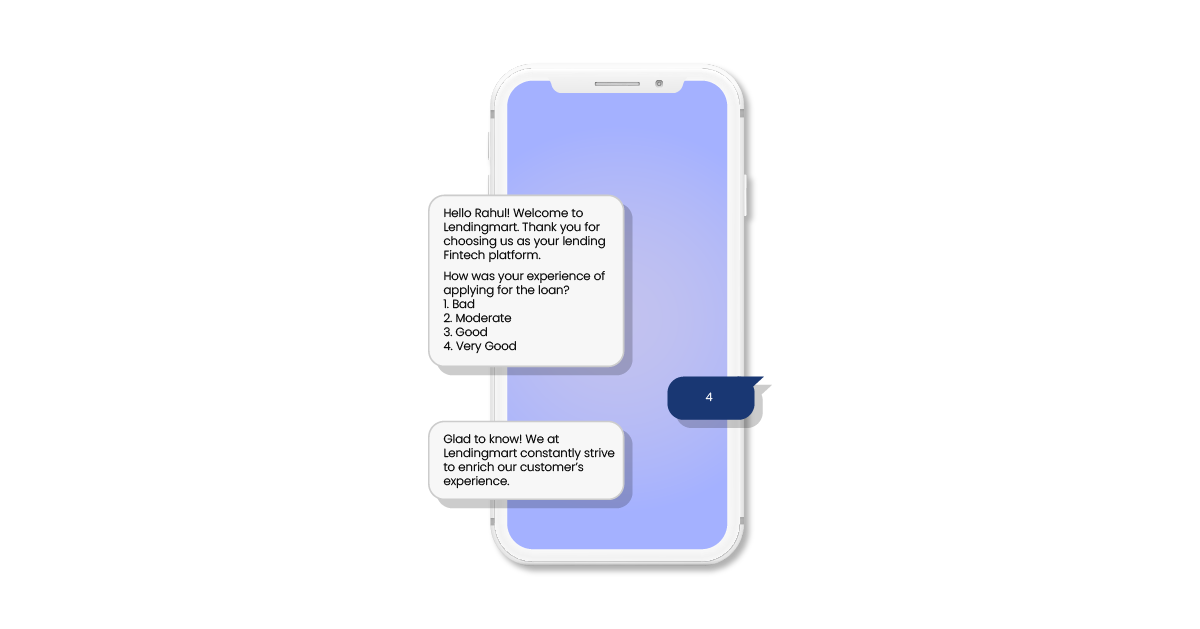
Finally, referrals and co-marketing are key growth drivers in fintech. AI agents send friendly nudges at the right moments in the lending journey, for example, prompting users to share referral codes or apply again. In addition, they collect survey feedback in a few taps.
Benefits of AI in Fintech
Conversational AI learns from past interactions and keeps improving. It also gives each user personal help with their specific account. Here’s what fintechs gain:
- Faster, more accurate support: instant answers at any hour.
- 24/7 availability: customers get help even outside business hours.
- Continuous improvement: AI gets better with every conversation.
- Structured data collection: insights on common issues guide product decisions.
- Easy integration: AI connects with CRMs, KYC tools, and loan systems.
- Simple self-service: customers complete tasks without calling support.
Conclusion
Above all, people love personalized experiences, and AI in fintech makes them possible at scale. When fintechs focus on security and natural conversations, customers adopt AI-powered services faster.
Gupshup’s conversational AI helps fintech companies offer faster onboarding, more secure transactions, smoother operations, and better customer support across WhatsApp, SMS, RCS, and other channels. Ready to build better fintech customer journeys? Book a demo today.
FAQs
What is AI in fintech?
AI in fintech is the use of artificial intelligence, especially conversational AI agents and chatbots, to make financial services faster, safer, and easier. It helps with onboarding, KYC, loans, transaction alerts, fraud detection, and 24/7 customer support.
How is conversational AI used in fintech?
Fintech companies use conversational AI for KYC, loan applications, EMI calculations, balance checks, transaction alerts, payment reminders, lead qualification, referrals, and customer support on WhatsApp and other messaging apps.
What are the benefits of AI in fintech?
The main benefits include faster support, 24/7 availability, quicker onboarding, lower operating costs, better fraud response, personalized offers, and higher customer loyalty.
Can fintech companies complete KYC on WhatsApp?
Yes. An AI agent on WhatsApp can collect customer details, request document uploads, and pass them to verification systems, which makes onboarding faster and easier.
Is conversational AI secure for financial services?
It can be, when it runs on a trusted platform with encryption, verified business accounts, access controls, and compliance with local data protection rules. Customers should never share PINs or passwords in any chat