+91-9355000192
 Login

AI in Electronics: 3 Benefits for Sales, Engagement, and Support
- What Is AI in Electronics?
- Key Customer Experience Challenges in Consumer Electronics
- Benefits of AI in Electronics Retail
- How Gupshup Uses AI to Boost Engagement for Electronics Brands
- Conclusion
See the power of intelligent conversations for your brand.

However, buying a TV, laptop, or air conditioner isn’t simple. Shoppers compare dozens of models, read reviews, check offers, and still have questions that a product page can’t answer. Then, after the sale, they also want quick help with installation, warranties, and repairs. As a result, when brands can’t respond fast, buyers drift to competitors. AI in electronics solves this. Today, consumer electronics brands and retailers use AI agents on WhatsApp, Instagram, and websites to recommend the right products, answer questions instantly, process orders and payments, send delivery updates, and book after-sales service 24/7.
The opportunity is growing fast. According to IBEF, India’s electronics and consumer durables market is projected to grow from US$ 24–26 billion in 2022 to US$ 70–72 billion by 2030. In this blog, you’ll learn what AI in electronics means for brands and retailers, the customer experience challenges it solves, and how Gupshup helps electronics businesses boost engagement across the buying journey.
What Is AI in Electronics?
AI in electronics refers to the use of artificial intelligence in how electronic products are made, used, sold, and supported. For consumer electronics brands and retailers, it mainly means AI agents and conversational AI that recommend products, answer questions, process orders, share delivery updates, and handle installation, warranty, and service requests through chat, 24/7.
Key Customer Experience Challenges in Consumer Electronics
In fact, competition in consumer electronics keeps intensifying. At the same time, the buying journey has become more complex, as shoppers weigh brand awareness, online ratings, past experiences, and price before they decide. Consequently, brands face four big challenges:
- Too many choices: shoppers feel overwhelmed by the number of models and features.
- Low trust in recommendations: buyers are skeptical of generic sales pitches.
- Demand for quick purchases: shoppers want a fast, hassle-free checkout.
- Poor after-sales support: customers expect easy installation, warranty, and repair help.
Meanwhile, customers increasingly want to reach brands through chat. According to Meta’s State of Business Messaging report, based on a 2025 Kantar survey across 22 markets, 72.4% of consumers are more likely to buy from brands that offer messaging.
Benefits of AI in Electronics Retail
Conversational AI helps consumer electronics businesses in several ways:
- 24/7 availability: customers get answers at any hour.
- Easier online shopping: shoppers browse, compare, and buy inside a chat.
- Higher engagement: unlike ads, conversations feel personal, not pushy.
- Real-time order updates: customers get order status and tracking automatically.
- Timely offers: brands share discounts, launches, and limited-time deals.
- Simple after-sales support: customers book installation, demos, and repairs in a few taps.
How Gupshup Uses AI to Boost Engagement for Electronics Brands
As more electronics sales move online, brands are shifting budgets from traditional media to digital channels. For example, they’re focusing on customer intent in search ads and making social media more shoppable. Here’s how Gupshup helps consumer electronics companies turn these touchpoints into conversations that sell.
1. Simple Ordering and Payments in Chat
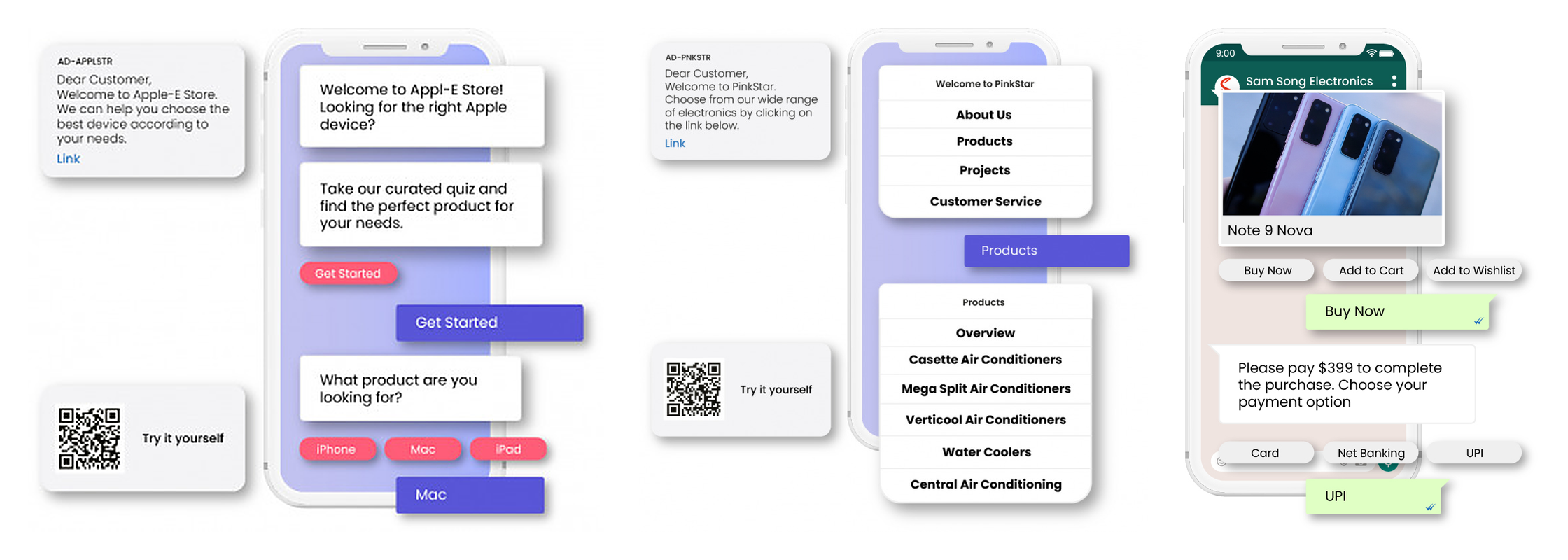
First, customers get a simple interface to browse product catalogs, add items to the cart, apply coupon codes, and pay securely, all within the chat. Then, after the purchase, they can ask for a tracking link anytime.
In addition, Gupshup’s AI agents help shoppers make informed decisions. For example, they can share product images, videos, and spec comparisons, and then recommend the right model based on budget and needs. On top of that, they can verify users at sign-up with OTPs and send updates from order confirmation to delivery.
2. Engagement Across Multiple Messaging Channels

Next, Gupshup connects you with customers on the channels they already use, including the WhatsApp API, Instagram, RCS, and SMS.
So, when a user comments on your Instagram post asking about a product, the AI agent can message them with details. Similarly, it can notify interested buyers when a product is back in stock.
With WhatsApp commerce, customers can view catalogs, check out, and pay without leaving the chat. Beyond that, you can send timely offers to past customers, announce new launches, and encourage repeat purchases. As a result, your brand stays top of mind.
3. After-Sales Support and Feedback
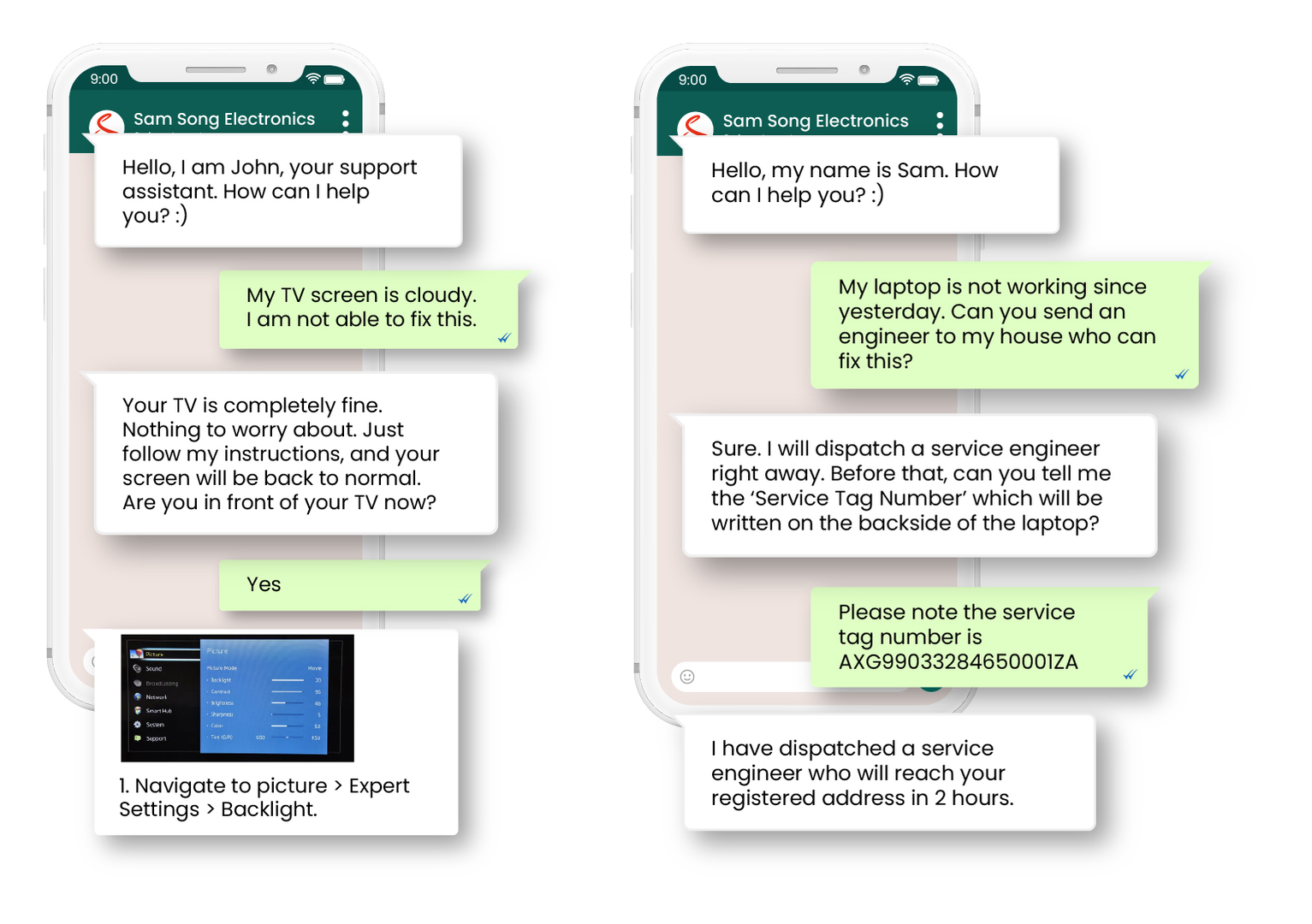
Above all, after-sales service matters a lot in electronics. That’s why the AI agent lets customers raise complaints, register warranties, and book installation or repair visits in the chat. Next, it collects the issue details and passes them to your support team, so agents can resolve problems faster.
Then, after delivery or service, the AI agent asks customers to rate the product, delivery, and support experience. In turn, these insights help you measure satisfaction and improve your service.
Conclusion
Today, electronics shoppers research, compare, and buy on their phones, and they expect quick, personal help at every step. Fortunately, AI in electronics makes that possible. With conversational AI, brands can guide buyers to the right product, simplify checkout, and deliver after-sales support that builds loyalty.
Gupshup helps consumer electronics brands and retailers transform their marketing, commerce, and support with AI agents on WhatsApp and other messaging channels. Ready to see how AI can boost your electronics sales? Book a demo today.
FAQs
How is AI used in electronics?
AI is used in electronics to design and manufacture products, power smart features like voice assistants and image processing, and improve sales and support. In addition, consumer electronics brands use AI agents to recommend products, answer questions, process orders, and handle installation and warranty requests.
How does AI help consumer electronics retailers?
AI helps retailers recommend the right products, answer spec and pricing questions instantly, recover abandoned carts, send order updates, promote offers, and automate after-sales service, so they sell more and support customers better.
What are the benefits of conversational AI for electronics brands?
Conversational AI offers 24/7 support, personalized product recommendations, faster checkout, real-time order tracking, timely offers, and easy booking of installation, demos, and repairs.
Can customers buy electronics on WhatsApp?
Yes. With the WhatsApp Business API, electronics brands can share product catalogs, answer questions, accept payments, and send delivery updates, all within WhatsApp.
How can AI improve after-sales service in electronics?
AI agents let customers register warranties, raise complaints, book installation or repair visits, and track service requests in a chat. In addition, they collect feedback and hand complex issues to human agents.

Product Marketing Manager