+91-9355000192
 Login

How Can Chatbots Simplify Customer FAQs For Retailers In South Africa?
- What Is a Retail Chatbot?
- Why You Need a Retail Chatbot in South Africa Now
- Retail Chatbots vs Human Agents
- Top Retail Chatbot Use Cases in South Africa
- Instagram and WhatsApp: The Best Channels for Retail Chatbots in South Africa
- How Gupshup Helps South African Retailers
- Conclusion
- FAQ
See the power of intelligent conversations for your brand.

Let’s be real. South African shoppers now browse, compare, and buy on their phones, often late at night and usually on Instagram or WhatsApp. When their questions about stock, delivery, or returns go unanswered, they simply move on to another store. A retail chatbot in South Africa solves this. It answers shopper questions instantly, checks product availability, tracks orders, and guides returns around the clock. As a result, retailers deliver faster, more personal service without stretching their teams.
What Is a Retail Chatbot?
A retail chatbot is an AI-powered assistant that helps shoppers through chat on a retailer’s website, app, and messaging channels such as Instagram, WhatsApp, and Facebook Messenger. It answers questions about products, stock, store hours, delivery, and returns, recommends items, collects feedback, and hands complex queries to human agents.
Why You Need a Retail Chatbot in South Africa Now
South Africa’s online retail market is growing fast. According to World Wide Worx, online retail reached about R130 billion in 2025 and could grow 22.5% to around R159 billion in 2026. In addition, online now makes up roughly 10% of total national retail.
Shoppers are also highly connected. DataReportal’s Digital 2026 report shows that South Africa had 51.7 million internet users at the end of 2025, or nearly 80% of the population. At the same time, the country counts 29.1 million social media user identities.
With growth comes pressure, however. Retailers need to:
- Answer a rising flood of pre-purchase questions quickly
- Offer personalized support at any hour
- Use customer data to tailor products and predict trends
- Serve shoppers in several languages
Human teams alone can’t keep up with this volume. That’s exactly where a retail chatbot in South Africa comes in.
Retail Chatbots vs Human Agents
Today, South African retailers increasingly use chatbots alongside their teams. Here’s what a retail chatbot adds:
- 24/7 availability and speed: it answers instantly, day or night, so shoppers never wait in a queue.
- Scalability at lower cost: it handles high volumes during sales like Black Friday without extra staff.
- Consistency: it gives the same accurate answer every time, which keeps service quality high.
- Multilingual support: it can reply in multiple languages, which matters in a country with 12 official languages.
- Data and insights: it captures what shoppers ask, so you can improve products and service.
- Faster social media service: it replies quickly on Instagram and Facebook, which boosts engagement and loyalty.
However, chatbots work best with humans, not instead of them. In a September 2026 Gartner survey, 87% of customers said access to a human agent is essential when companies use AI for service. So, the best retail chatbots handle routine questions and pass complex ones to your team.
Top Retail Chatbot Use Cases in South Africa
From browsing to after-sales support, here’s how a retail chatbot helps at every stage of the shopping journey.
Pre-Sale
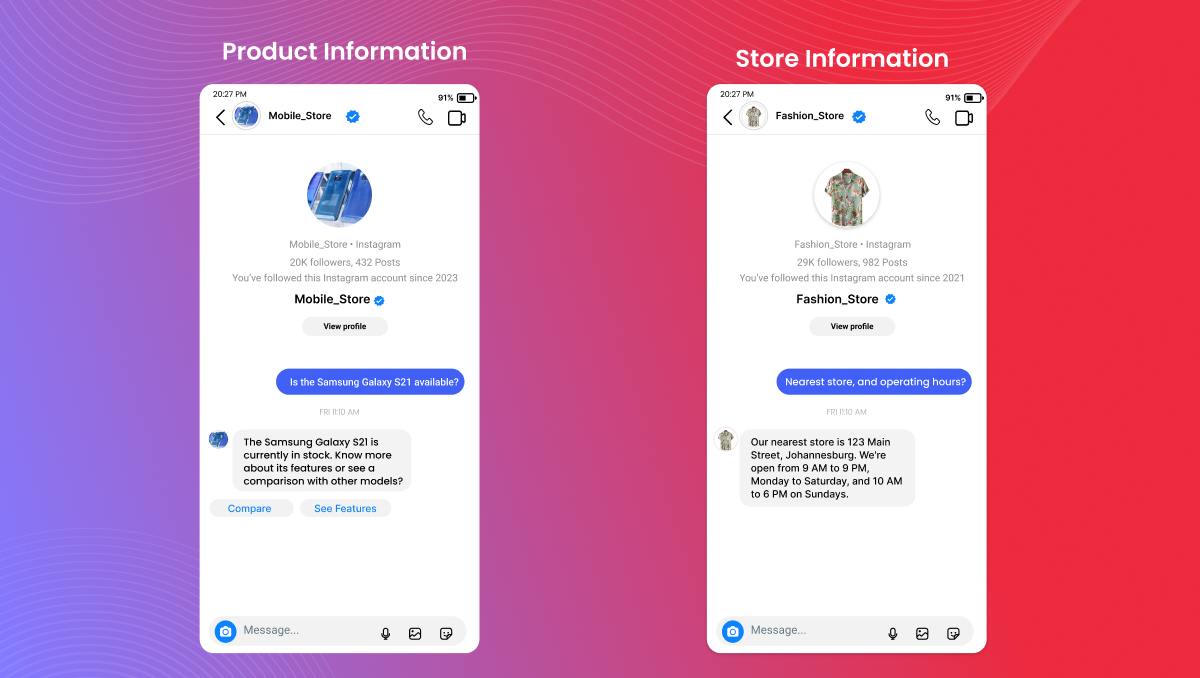
Product Information
Before buying, shoppers want to know about availability, specifications, and prices. A chatbot shares these details instantly. It can also compare products, highlight key features, and suggest alternatives when an item is out of stock.
For example, a shopper messages your Instagram account asking if a pair of sneakers comes in size 8. The chatbot confirms stock, shares the price, and suggests matching items, all without waiting for an agent.
Store Information
Similarly, questions about store locations, opening hours, and contact details come up constantly. A chatbot answers them in seconds, even when your agents are offline. As a result, shoppers can plan their visit with confidence.
During Sale
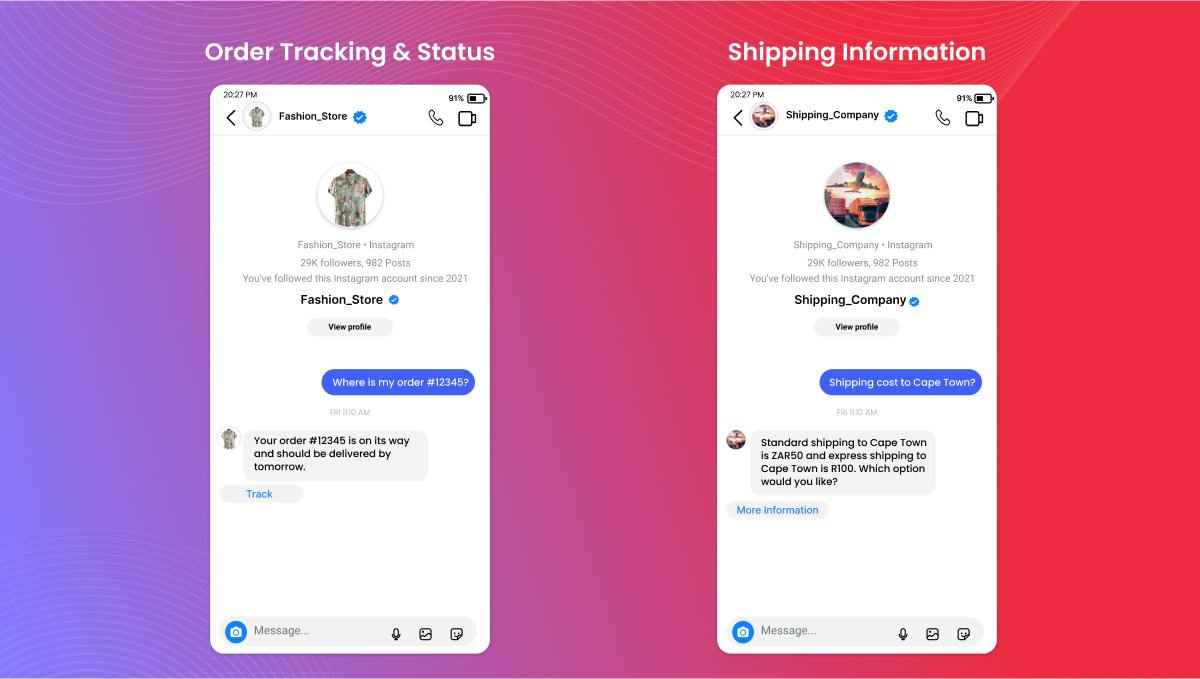
Order Tracking and Status
“Where’s my order?” is one of the most common questions in retail. A chatbot shares real-time updates on order status, shipping progress, and delivery times, so customers don’t have to track orders manually.
Shipping Information
In addition, shoppers often ask about shipping costs, delivery times, and courier options. A chatbot gives clear answers, which helps them buy with confidence. Our guide to automated Instagram DMs shows how retailers handle these questions at scale.
Post-Sale
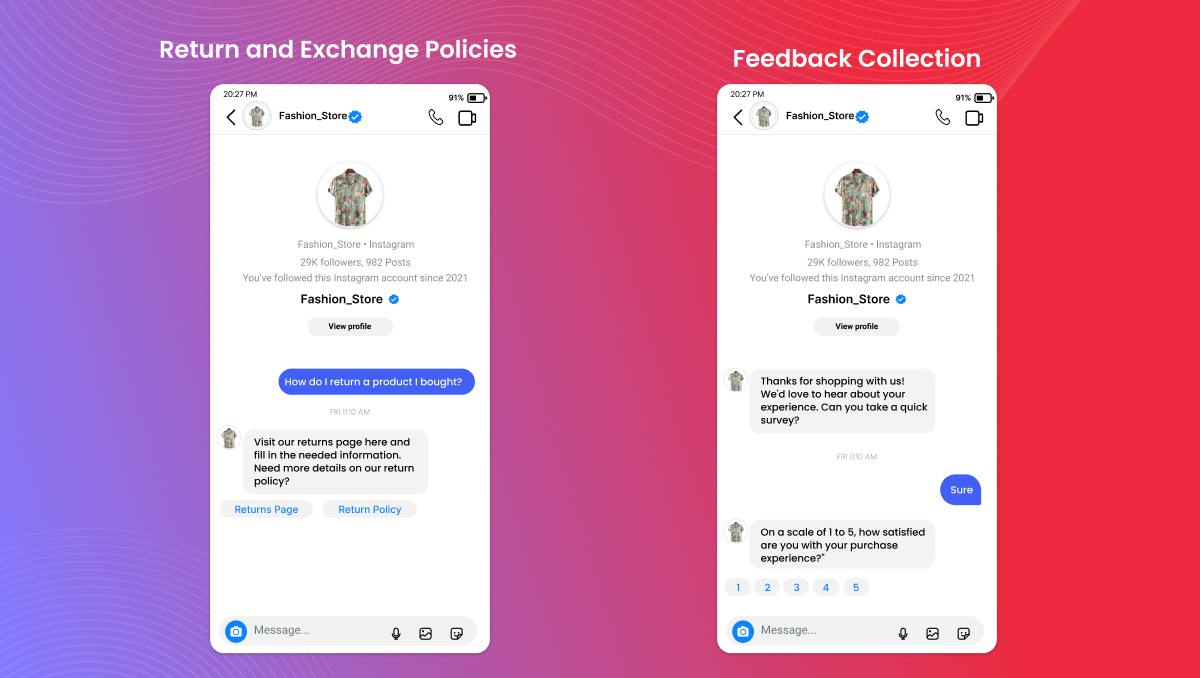
Returns and Exchanges
After a sale, clear return and exchange processes keep customers happy. A chatbot explains the policy, checks eligibility, and guides customers through each step of a return or exchange.
Feedback Collection
Once the order arrives, a chatbot can also ask for a rating or run a short survey. This feedback shows you what shoppers like and what to fix. Learn more about elevating customer support on WhatsApp, including feedback flows.
Instagram and WhatsApp: The Best Channels for Retail Chatbots in South Africa
South African shoppers discover brands on social media and chat with them on messaging apps. That’s why the most effective retail chatbots run where shoppers already spend time.
With the Instagram Messenger API, retailers can connect a chatbot to their Instagram account. Shoppers can then ask questions, get product recommendations, and track orders without leaving the app.
- Faster replies: the chatbot answers DMs and story replies instantly, so you never miss a sale.
- Higher engagement: it shares new arrivals, promotions, and personalized picks, which builds loyalty.
- Richer experiences: carousels and quick-reply buttons make browsing easy.
Likewise, WhatsApp is a natural fit for retail. With the WhatsApp Business API, retailers can send order updates, cart reminders, and promotions, and let customers shop inside the chat. See why retailers are evangelizing WhatsApp in retail.
How Gupshup Helps South African Retailers
Gupshup helps you launch a retail chatbot in South Africa that sells and supports across Instagram, WhatsApp, web, and more. With Gupshup’s Instagram Messenger API solution, you can turn followers into customers using rich templates, product carousels, and automated FAQ replies.
In addition, Gupshup’s AI agents understand natural language, answer questions 24/7, and hand off to your team when a shopper needs a person. As a result, you can manage high volumes of queries, keep service consistent, and boost conversions. Explore our solutions for retail and e-commerce to see more.
Conclusion
AI chatbots are changing retail in South Africa. With online sales growing fast and shoppers living on their phones, retailers need a way to answer every question instantly. A retail chatbot in South Africa delivers exactly that, helping you cut costs, improve customer satisfaction, and learn what your shoppers want.
As technology keeps improving, chatbots will play an even bigger role in helping retailers stay competitive. Ready to get started? Book a Demo today to build your retail chatbot.
FAQ
How do you make a chatbot for FAQs?
First, list your most common customer questions and their answers. Next, choose a chatbot platform with natural language processing, so the bot understands different ways of asking the same question. Then build and test your flows on your main channels, such as Instagram or WhatsApp, before launch. Finally, review conversations regularly and add new answers.
How are chatbots used in the retail industry?
Retailers use chatbots to answer product and stock questions, share store information, recommend products, track orders, explain shipping, manage returns, and collect feedback. They work around the clock on websites, apps, and messaging channels, and hand complex questions to human agents.
How do chatbots help handle customer queries faster?
Chatbots reply instantly to common questions, any time of day. Because they handle many conversations at once, shoppers never wait in a queue. As a result, human agents have more time for complex issues.
Can a retail chatbot reply in South African languages?
Yes. Modern AI chatbots can support multiple languages, so retailers can serve shoppers in English and other languages their customers prefer. Before launch, test each language carefully to make sure answers are accurate and natural.
Is a retail chatbot compliant with POPIA?
A retail chatbot can comply with South Africa’s Protection of Personal Information Act (POPIA) if you set it up correctly. Collect only the data you need, get customer consent, store data securely, and let customers access or delete their information. Also, choose a chatbot provider with strong security practices.
How much does a retail chatbot cost in South Africa?
Costs depend on your channels, conversation volume, and integrations. Simple FAQ chatbots are affordable to set up, while AI chatbots connected to your stock, order, and payment systems cost more. WhatsApp also charges per message, based on the message category.

Manna, an IT graduate with 8 years of content writing experience, is passionate about words and their power to convey ideas. When she's not crafting content, she is immersed in books, enjoys cricket matches and the rhythm of music, relishes beach strolls, and cherishes quality time with her furry friend. Her love for languages extends beyond writing, as she is a knower of Hindi, English, Urdu, and Spanish.
Read: Announcing Price Changes for WhatsApp Business API: A Strategic Shift Towards Quality and Conversations