+91-9355000192
 Login

Building Customer Relationships That Last: Essential Strategies

- What Makes Strong Customer Relationships?
- The Importance of Building Lasting Customer Relationships
- Essential Strategies for Building Lasting Customer Relationships
- Conclusion
- FAQs
See the power of intelligent conversations for your brand.

In today’s world, thriving businesses are not built on sales alone. They are built on genuine customer relationships. Modern consumers want more than a simple transaction. They look for trust, a feeling of belonging, and good reasons to stay loyal.
Strong customer relationships also protect your budget. Studies show that acquiring a new customer can cost 5 to 25 times more than retaining an existing one, no matter your industry. So building lasting relationships with current customers is smart and essential for long-term success. Get it right, and you will build a base of customers who stay with your brand for life.
The numbers back this up. According to Forbes Advisor, 48% of consumers are willing to pay more for quality customer service. Strong relationships mean happy customers, repeat business, and a reputation that speaks for itself. They need a strategic approach that understands customer needs and delivers consistently personalized experiences.
But how do you build these bonds and move beyond superficial interactions?
In this blog, we cover everything from why customer relationships matter to strategies that actually work. Let’s get started!
What Makes Strong Customer Relationships?
73% of customers say a positive buying experience affects their purchase decision. In a crowded market with endless options, strong customer relationships are your competitive edge. They make customers feel valued, understood, and cared for.
In the past, customers were happy with basic service. They wanted their needs met and nothing more. Today, people no longer choose businesses on price or product alone. They choose companies they feel connected to. That connection depends on four things:
- Personalization: Personalized experiences make every interaction feel unique. For example, when a clothing brand sends recommendations based on a customer’s previous purchases, it shows they understand their style.
- Consistency: Consistency is about reliability. Whether a customer shops online or visits your store, the experience should feel seamless. A broken promise, like a late delivery or a missed follow-up, can ruin trust faster than you think.
- Trust: Trust is the foundation of every strong relationship. For example, if a family buys a car and it works as promised, they will return for another purchase and recommend the brand to their loved ones.
- Loyalty: Loyalty is earned over time. It comes from showing customers that you value them beyond their wallets.
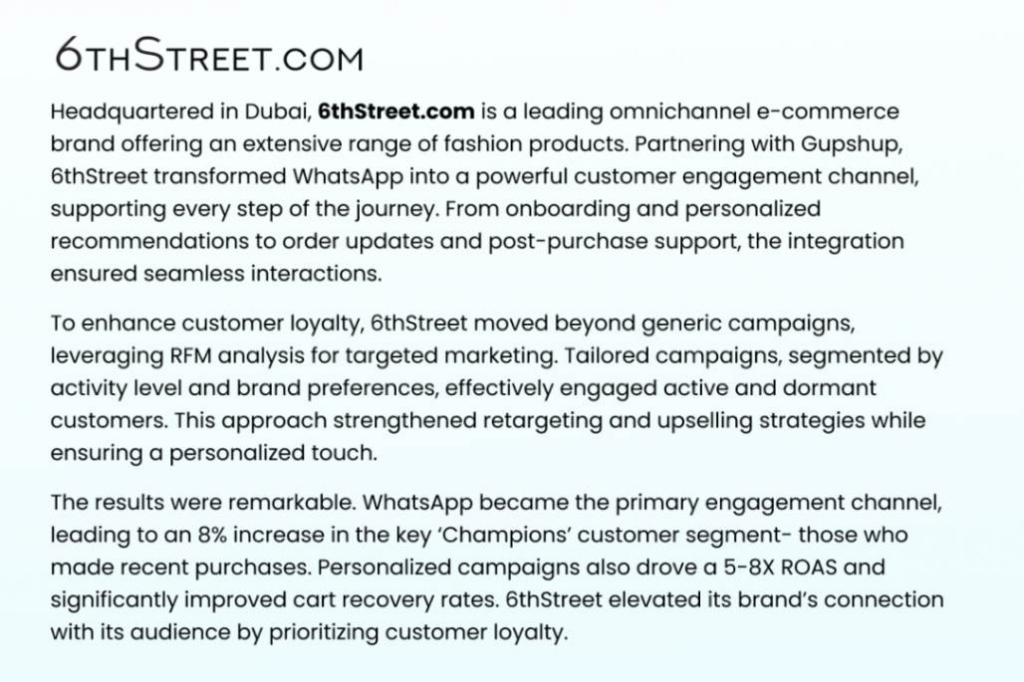
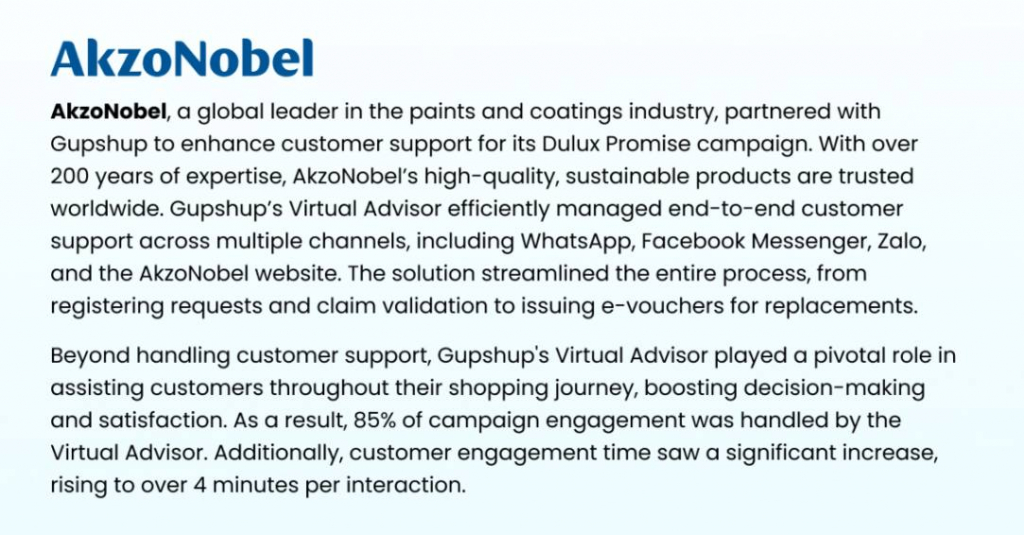
Let’s look at a prominent example from one of the leading global brands:
The Importance of Building Lasting Customer Relationships
Lasting customer relationships drive every part of your business. They keep customers coming back, increase their lifetime value, and turn them into your biggest promoters. Most importantly, they keep you from getting lost in the competition.
Let us explore how nurturing these relationships benefits your business.
Customer Retention and Lower Churn
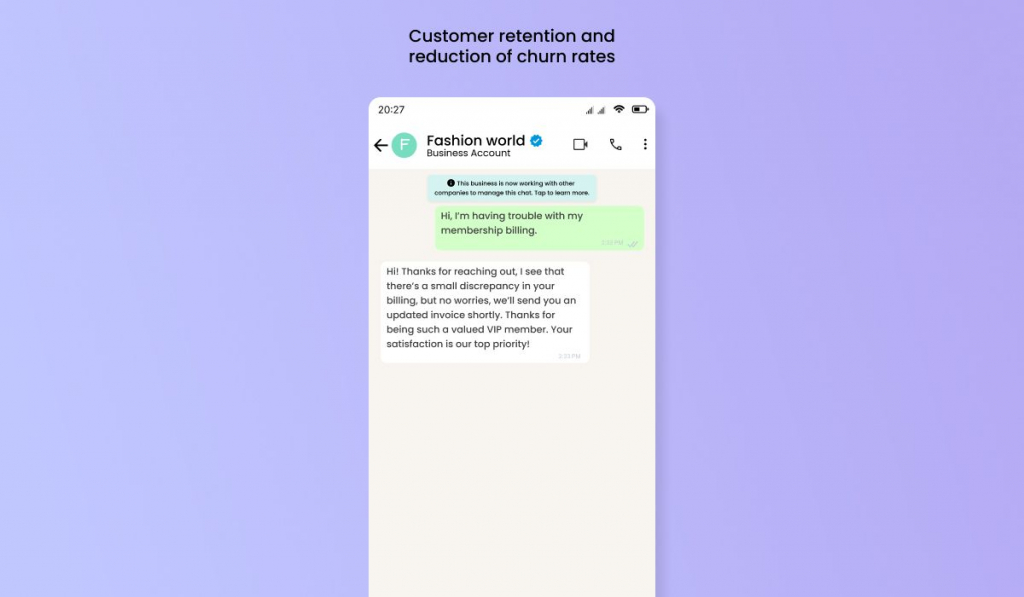
Customers leave when they feel ignored, undervalued, or frustrated. For example, say you have a VIP membership program and a customer has a billing issue. How you respond makes all the difference. Ignoring the problem might lead to a cancellation. A quick, helpful reply solves it and shows you care.
Nurtured relationships create loyalty, and a loyal customer is more forgiving of mistakes because they know you will make it right. Over time, conversational messaging lowers your churn rate and keeps revenue steady.
Higher Lifetime Value: The More They Trust, The More They Spend
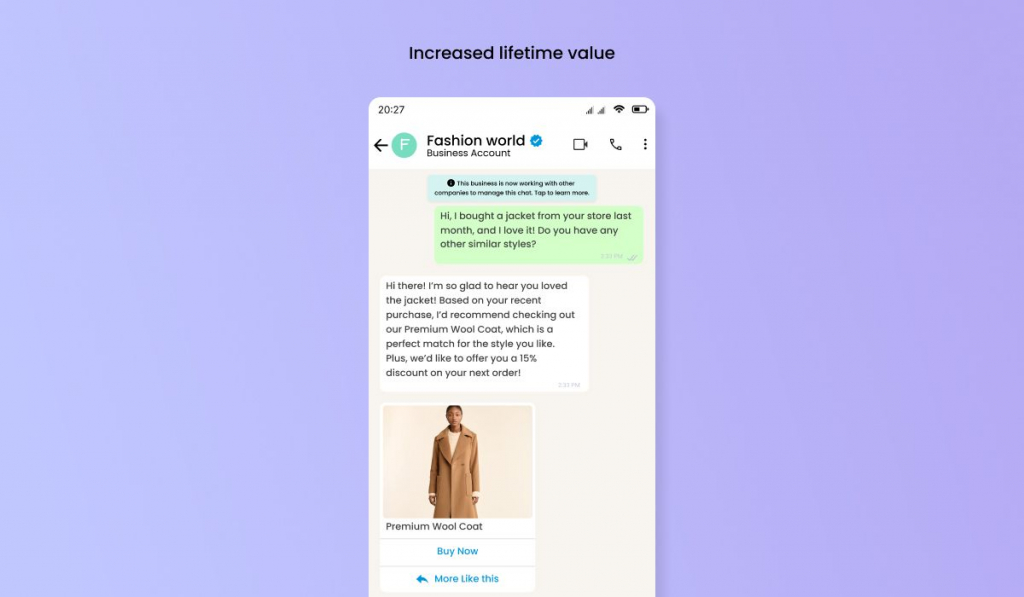
Lifetime value (LTV) is how much a customer contributes to your business over their entire relationship with you. Think of a clothing store where a first-time customer buys one item. If they love the experience, they will buy more, and next time they may choose higher-ticket products.
Over time, their trust in your brand turns into steady, growing revenue. It also makes upselling easier, because customers see that you understand their needs.
Brand Advocacy
People trust recommendations from friends more than ads, and loyal customers give those recommendations for free. This is brand advocacy.
Picture a restaurant that consistently delivers warm, friendly service. A family who visits every Friday tells their neighbors, colleagues, and relatives about the food and the service. If you keep that family’s customer journey great, you gain a steady flow of new customers, all because of loyalty.
Standing Out in a Crowded Market
Your competitors challenge you constantly by offering similar products at similar prices. So what makes you different? The answer is customer relationships.
Say you run a car dealership, and a competitor offers the same model at the same price. You remember your customer’s name, follow up after the sale, and share free maintenance tips. The other dealer treats them like just another buyer. Which one will the customer return to?
When customers feel a bond with your brand, they choose you again and again. That emotional connection is something no discount or flashy campaign can match.
Essential Strategies for Building Lasting Customer Relationships
Businesses that prioritize great customer service see better results across the board. Strong customer relationships take care, technology, and thoughtful strategy. Here are six effective strategies:
1. Prioritize Personalization
Customers today expect more than a generic experience. They want to feel valued and understood, and personalized messaging makes this possible by tailoring every interaction to individual preferences.
How do you achieve this? By collecting and analyzing data. For example, if a customer visits your online store every weekend, sending them a discount on their cart items shows you are paying attention. You can personalize across teams:
- Marketing: Email campaigns featuring products your customers have browsed.
- Support: Knowing their previous issues, so they never have to explain again.
- Sales: Offering products based on their purchase history.
To get started, gather feedback through surveys, reviews, and direct conversations. A simple “How did we do?” after a service interaction can reveal chances to improve and connect.
2. Communicate Effectively Across Multiple Channels
Customers are everywhere: on WhatsApp, Instagram, and email. Your business should meet them where they feel most comfortable. Whichever channel you use, your tone and message must match your brand’s voice.
Take the WhatsApp API as an example. With millions of users, you can send order updates, answer questions, and collect feedback in real time. If you are a clothing brand, you can notify a customer about their delivery and share styling tips in the same chat.
3. Leverage Technology
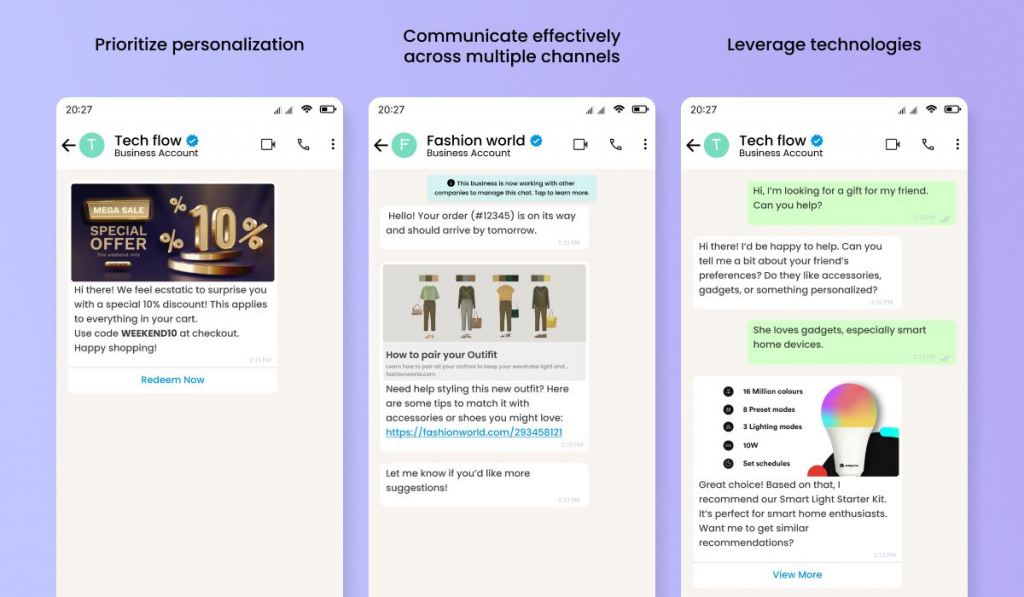
Technology can take your customer interactions to the next level. As businesses use artificial intelligence to gain customer insights, adding conversational AI to your customer relationship management (CRM) system is a smart move. It gives you:
- Instant responses to common queries.
- Personalized recommendations based on customer history.
- Mood and urgency detection, so replies can adjust their tone.
On top of that, friendly chatbots powered by conversational AI can handle many queries at once, work 24/7, and escalate complex issues to human agents when needed.
For instance, a chatbot on your website can guide customers to the right product while noting their preferences. Those preferences are stored in your CRM, so your sales team can follow up with tailored offers.
4. Analyze CRM software to understand your customers
Customer relationship management (CRM) software is your central hub for customer interactions. It collects data from every channel, so you can see each customer’s history, preferences, and past issues in one place. Reviewing that data regularly helps you spot patterns and strengthen your customer relationships. You can even connect WhatsApp to your CRM, so every chat is logged automatically.
When your CRM works with conversational AI, it becomes even more powerful. For example, if a customer complains on Instagram and later contacts support on WhatsApp, the CRM makes sure you know about the earlier issue. This seamless experience reassures customers that their concerns are being heard.
Add Chatbots to the Platforms Your Customers Use
AI chatbots work well on platforms your customers already love.
- Social media: On Instagram or Facebook, chatbots engage followers by answering queries in real time. A chatbot can help a customer pick the right product while they browse your latest post.
- WhatsApp: Chatbots make conversations direct and convenient. A customer can check an order status or ask for product recommendations in a quick chat.
5. Deliver Consistent and Reliable Service
Customers trust businesses that deliver on their promises, and consistency builds that trust over time.
For instance, if you guarantee same-day delivery, stick to it every time. If your support team is known for quick responses, make sure that happens in every interaction. Exceeding expectations is even better. A personalized thank-you email or a small freebie with an order can leave a lasting impression.
6. Gather and Act on Feedback
Listening to your customers is one of the easiest ways to improve. Ask for feedback actively and make changes based on what you hear.
For example, if customers often mention slow delivery, work on speeding it up. Then tell them you made the change because of their input. This shows that you listened.
You can take this further by:
- Using surveys for structured feedback.
- Reading reviews to spot trends.
- Asking directly, “What can we do better?”
7. Reward Loyalty
Loyal customers are your most valuable asset, so reward them for their continued support. Programs can be simple or creative. For example, you can:
- Offer discounts or free products based on points earned.
- Personalize rewards, such as birthday gifts or early access to new products.
You can even run loyalty programs on WhatsApp, where customers already spend their time. These small gestures build emotional resonance and keep customers coming back.
Conclusion
When you prioritize connection, personalization, and consistency, the results speak for themselves. In a market full of choices, strong customer relationships set businesses apart. With the right tools, like CRM software and effective communication, you can deliver experiences customers love.
If you need guidance, contact Gupshup. Our conversational support powered by chatbots makes building customer relationships easier. Using these strategies across multiple channels also gives you valuable data to analyze and learn from.
Start building these bonds today, and watch how far they take you tomorrow. Long-term customer relationships are in your hands. Request a Demo, and watch your business grow like never before.
FAQs
1. How can CRM software improve my LTV score?
CRM software helps track customer interactions, personalize experiences, and automate follow-ups. This leads to better engagement and more repeat sales, which boosts LTV.
2. Can I use AI chatbots to increase customer satisfaction?
Yes. AI chatbots give instant, 24/7 support, personalized responses, and efficient service. This improves customer satisfaction and encourages repeat business.
3. Do stronger customer relationships lead to higher ROI?
Yes. Strong customer relationships lead to higher retention, repeat purchases, and positive word of mouth. Together, these increase ROI over time.
4. What should I keep in mind before giving a loyalty reward?
Make sure rewards are valuable, achievable, and personalized to customer preferences. Also weigh the cost against the potential long-term loyalty benefits.
5. What are customer relationships in business?
Customer relationships are the ongoing connections between a business and its customers. They are built through every interaction, from the first purchase to support and follow-up. Strong ones create trust, repeat purchases, and word-of-mouth referrals.
6. What are the main types of customer relationships?
A common model lists personal assistance, self-service, automated services, communities, and co-creation. Most businesses mix these. For example, they pair automated chat for quick questions with a human agent for complex ones.
7. How do you measure the strength of customer relationships?
Track customer retention rate, churn rate, repeat purchase rate, lifetime value, Net Promoter Score (NPS), and customer satisfaction (CSAT). Watching these together shows whether customers are staying, spending more, and recommending you.

A passionate writer with a penchant for being a wordsmith, I turn complex cloud technology into compelling stories. Drawing from 15+ years of experience crafting content for SaaS and CPaaS brands, I help tech companies connect with their audiences by bridging the gap between technical features and business impact. Off the clock, I seek inspiration between mountain trails and ocean waves, where my best ideas often find me.